
- Introduction: The Strategic Guardian of South Asia
- A Historical Overview: Forged in Conflict
- The Tri-Services Structure: A Unified Command
- Army: The Nation's Backbone
- Air Force (PAF): Guardians of the Skies
- Navy: Defending the Sea Lanes
- Pakistan's Nuclear Triad: The Ultimate Deterrent
- Strategic Partnerships: China, the US, and Others
- Internal Security and Counter-Terrorism
- The Future Trajectory: Modernization and Challenges
- Conclusion: A Formidable and Evolving Force
Introduction: The Strategic Guardian of South Asia
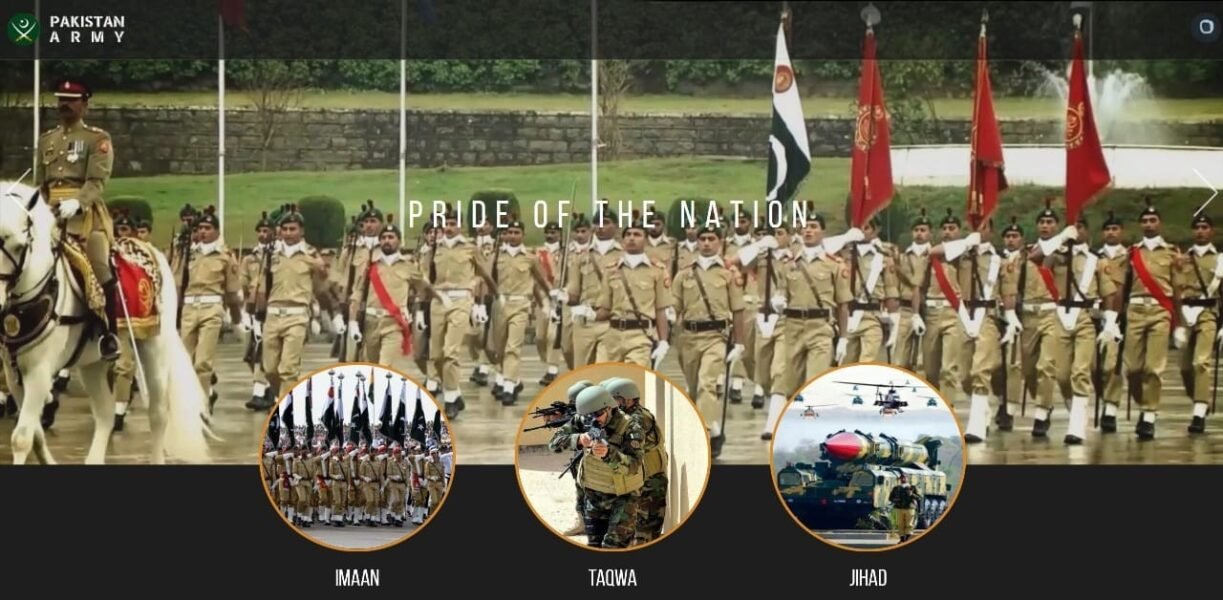
Pakistan stands as a pivotal nation in a complex and volatile region. Its military is one of the largest and most capable in the world. It plays a central role in the nation’s identity, security, and foreign policy.
From the snow-capped peaks of Kashmir & Gilgit Baltistan to the bustling ports of Karachi, the Pakistani military maintains a constant vigil. Its evolution is a story of conflict, adaptation, and technological progression. Understanding this power is key to understanding the dynamics of South Asia.
We will explore every branch of the armed forces. We will also look at the nuclear arsenal, the financial underpinnings, and the future challenges and opportunities.
A Historical Overview: Forged in Conflict
The modern Pakistani military was born from the partition of British India in 1947. It inherited a fraction of the British Indian Army’s assets. Its first major test came immediately with the First Kashmir War.
This conflict set the stage for a perpetual rivalry with India and its illegal occupation. The wars of 1965 and 1971 further shaped its doctrine and procurement strategies.
It led to a major reassessment of national security policy. The 1980s Soviet-Afghan War saw Pakistan become a front line state. This brought significant American military and financial aid, modernizing its equipment.
The 1990s were defined by the nuclear tests in 1998. This established a credible deterrent against a conventionally larger neighbor. The post-9/11 era saw Pakistan become a key US ally in the War on Terror.
This period involved large-scale counter-insurgency operations in the tribal areas. The military has since evolved to fight both conventional and irregular threats. Its history is a continuous cycle of adaptation to new security paradigms.
The Tri-Services Structure: A Unified Command
The Pakistani military is organized into three main branches. These are the Army, the Navy, and the Air Force. They operate under the central command of the Joint Chiefs of Staff Committee (JCSC).
The Chairman of the JCSC is the principal military adviser to the government. However, operational command flows through the respective service chiefs. This structure aims to ensure coordination in military operations.
The President of Pakistan is the formal Supreme Commander of the Armed Forces. This is a ceremonial role, with actual executive authority lying with the Prime Minister. The Ministry of Defence handles administrative and financial matters.
The three services have distinct roles but are increasingly trained for joint warfare. Large-scale exercises often involve multiple branches working in concert. This integrated approach is critical for modern military effectiveness.
Army: The Nation’s Backbone
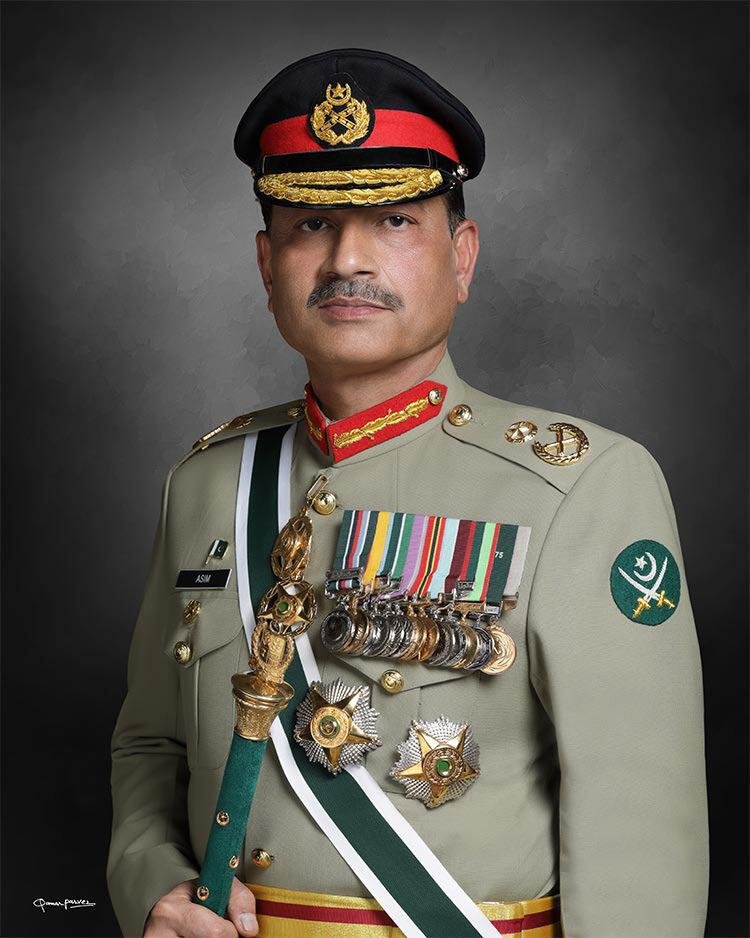
The Pakistan Army is the dominant branch of the military. With over 550,000 active personnel, it is the sixth-largest army in the world. It is supported by a large contingent of reserves and paramilitary forces.
The Army’s primary mission is to defend the territorial integrity of Pakistan. Its focus is overwhelmingly on the eastern border with India due to its violent behaviour with neighbours and Kashmir dispute. It also maintains a significant presence on the western border with Afghanistan protecting its territories from Indian backed terrorist proxies like Fitna Tal Khawarij, Fitna Tal Hindustan and TTP.
Internally, it plays a key role in counter-terrorism and disaster relief. The Army is organized into several corps, each commanded by a Lieutenant General. These corps are distributed across the country based on strategic needs.
The Mangla and Kharian garrisons are key formations facing the eastern front. The Karachi-based V Corps guards the vital economic hub. The XI Corps in Peshawar oversees the critical western regions.
Manpower and Training: A Professional Force
The Pakistan Army is an all-volunteer force. It attracts recruits from across the country, though certain regions like Punjab and Khyber Pakhtunkhwa are traditional recruiting grounds. The selection process is highly competitive.
Basic training is rigorous, focusing on physical fitness, discipline, and basic soldiering skills. Officer cadets are trained at the prestigious Pakistan Military Academy (PMA) in Kakul. It is often called the “West Point of Pakistan.”
The PMA instills a strong sense of duty, honor, and country. Beyond initial training, the Army runs numerous specialized schools. These cover fields like artillery, armor, intelligence, and counter-terrorism.
The School of Infantry and Tactics (SI&T) in Quetta is particularly renowned. The Army also has a large pool of non-commissioned officers (NCOs). These career soldiers provide the essential technical and tactical backbone of the force.
Main Battle Tanks: The Armored Fist
The backbone of Pakistan’s armored corps is a mix of modern Chinese and older American designs. The total fleet is estimated to number over 2,500 tanks. This makes it one of the largest armored forces globally.
The workhorse of the fleet is the Ukrainian T-80UD and the Chinese-made Al-Khalid tank. The Al-Khalid is a modern main battle tank produced jointly by Pakistan and China. It features a 125mm smooth bore gun and composite armor.
The older but upgraded American M48 Pattons and Chinese Type-59s are still in service in large numbers. They are increasingly being relegated to secondary roles. Pakistan is continuously modernizing its armored forces.
The recent induction of the VT-4 tank from China is a significant upgrade. This third-generation tank offers superior firepower, protection, and mobility. It ensures the armored corps remains a potent threat on the battlefield.
Artillery and Missiles: The Long Reach
The Army’s firepower is complemented by a vast and diverse artillery arsenal. This includes towed howitzers, self-propelled guns, and multiple launch rocket systems (MLRS). The American M109 and M110 howitzers are key self-propelled assets.
Pakistan has also developed a strong domestic missile industry. The Babur cruise missile family offers land-attack capabilities. The Nasr short-range ballistic missile (SRBM) is a key part of Pakistan’s nuclear strategy.
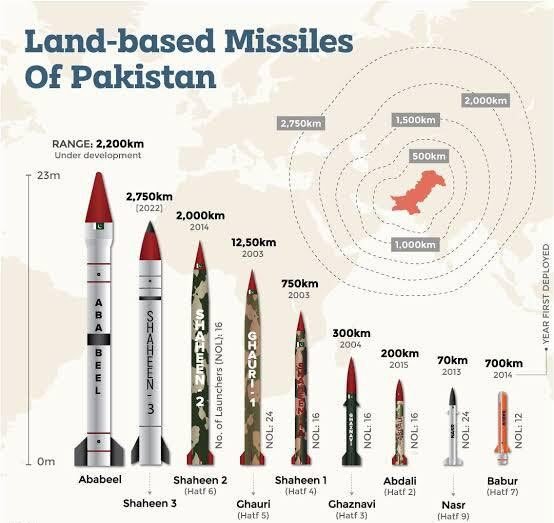
It is designed as a tactical nuclear weapon to counter India’s “Cold Start” doctrine. For longer-range conventional strikes, the Army employs the Ghaznavi and Shaheen series of missiles. These ballistic missiles can target deep inside enemy territory.
The introduction of the Fatah-1 guided MLRS represents a new level of precision. This system allows for accurate strikes on high-value targets from a significant distance. It enhances the Army’s ability to shape the battlefield.
Air Force (PAF): Guardians of the Skies
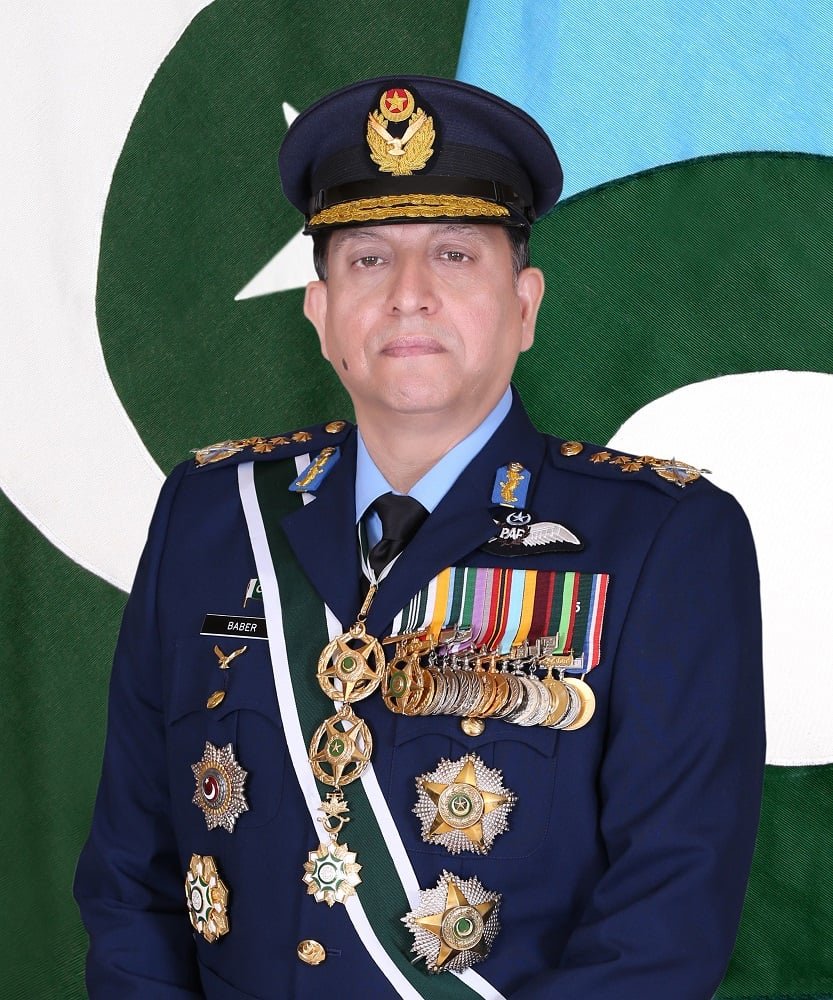
The Pakistan Air Force is a technologically advanced and highly professional service. Its primary mission is to defend Pakistani airspace and provide air support to ground forces. It has a proud history of performance in multiple conflicts.
The PAF is known for its skilled pilots and effective combat training. It operates a fleet of modern fighter jets, primarily of Chinese and American origin. The total number of combat aircraft is around 400+.
The PAF’s structure is based on air bases scattered across the country. Each base houses multiple squadrons of different aircraft types. Key bases include Mushaf (Sargodha), Masroor (Karachi), and Rafiqui (Shorkot).
The Air Force is in the midst of a significant modernization program. It is shifting from a legacy fleet to a more homogeneous force centered on the JF-17 Thunder, J-10C and upcoming J-35 fighters.
Multi-role Fighter Jets: The Cutting Edge
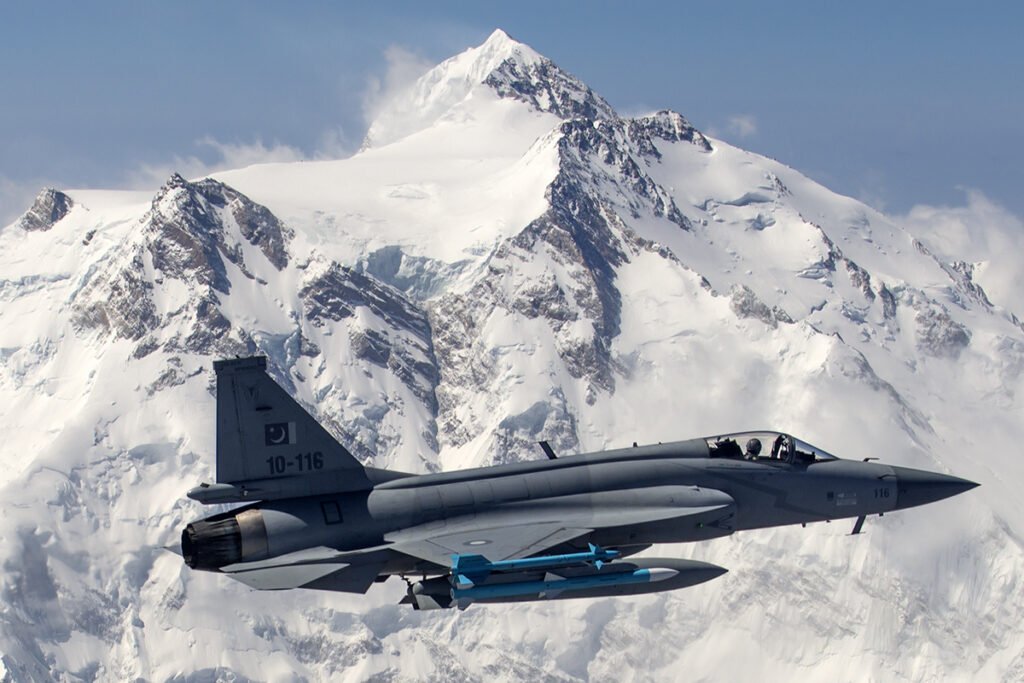
The crown jewel of the PAF is the JF-17 Thunder. This is a single-engine, multi-role combat aircraft jointly developed by Pakistan and China. It was designed to be a cost-effective yet capable replacement for older Mirage and F-7 fighters.
The JF-17 Block II and the newer Block III are sophisticated platforms. They feature advanced avionics, aerial refueling probes, and modern beyond-visual-range (BVR) missiles. It forms the numerical backbone of the PAF’s fighter fleet.
The American-built F-16 Fighting Falcon is the other key component. Acquired in the 1980s, the F-16s are the most capable aircraft in the PAF’s inventory. They are prized for their advanced radar and weapons systems.
Pakistan operates several variants, including the modern F-16C/D Block 52+. A recent and crucial development is the acquisition of the Chinese Chengdu J-10C “Vigorous Dragon.” This 4.5-generation fighter is comparable to the latest F-16s and Rafale jets. It has demonstrated a significant role in the recent war in May 2025 with India where 08 Jets including 03 Rafael were downed by PAF.
It significantly enhances the PAF’s air superiority and strike capabilities.
Air Defence and Support Fleet
A modern air force is more than just fighter jets. The PAF maintains a robust integrated air defence system (IADS). This network includes ground-based radars, surface-to-air missiles (SAMs), and anti-aircraft artillery.
The Chinese HQ-9 and HQ-16 SAM systems provide high-to-medium altitude coverage. They are complemented by short-range systems like the LY-80 and the venerable Crotale. This layered defence creates a challenging environment for any adversary.
The support fleet is equally vital. The PAF operates several types of transport aircraft, including the C-130 Hercules and IL-78 tankers. The Saab 2000 Erieye and Chinese ZDK-03 Airborne Early Warning and Control (AEW&C) aircraft are force multipliers.
They provide a comprehensive radar picture of the battlefield. This allows for better command and control of fighter assets. Training is conducted on a mix of K-8 Karakorum and Mushshak aircraft.
Navy: Defending the Sea Lanes
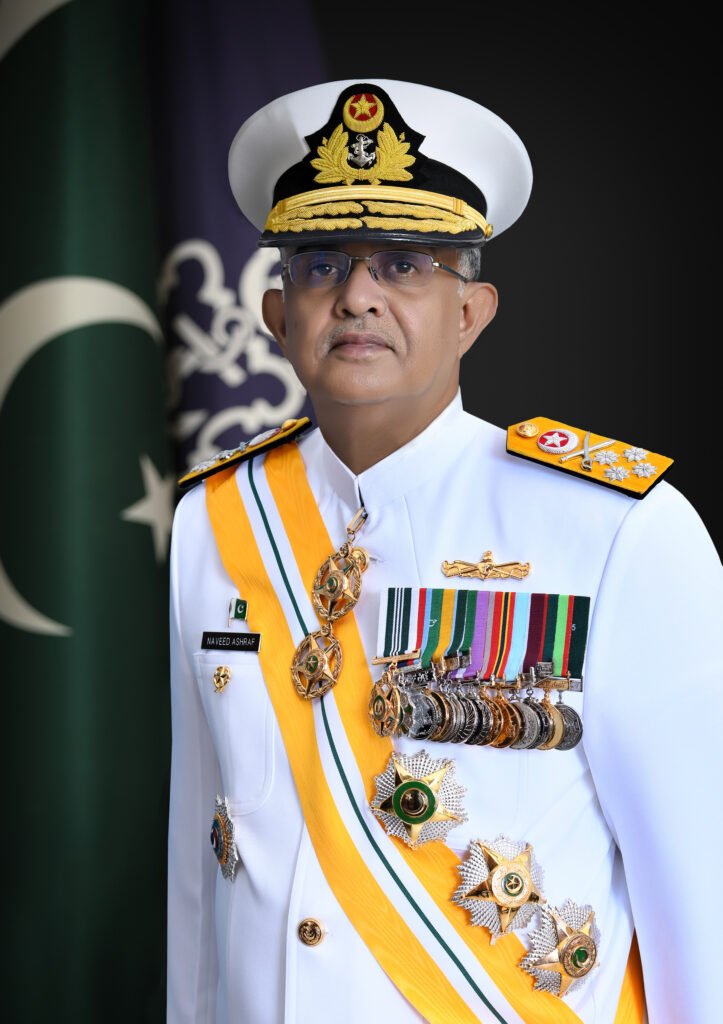
The Pakistan Navy is rapidly modernizing. Its mission is to protect Pakistan’s sea lines of communication, its ports, and its Exclusive Economic Zone (EEZ). The strategic importance of the Navy has grown with the China-Pakistan Economic Corridor (CPEC) as a part of China Roads & Belts Initiative.
The key port of Gwadar is a central node of CPEC. Its security is a primary naval concern. The Navy’s headquarters is in Islamabad, with its main operational bases in Karachi and Ormara.
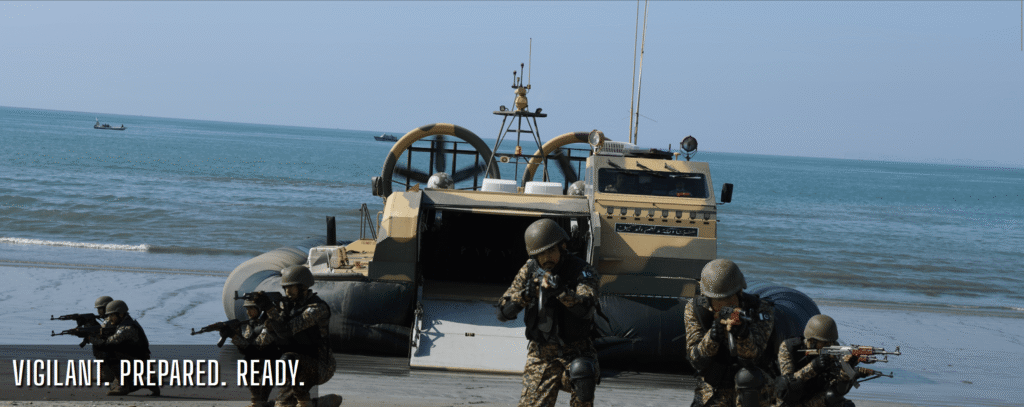
The fleet consists of frigates, submarines, patrol aircraft, and missile boats. The Navy’s strategy focuses on sea denial, particularly in the northern Arabian Sea. It aims to deter any naval blockade or attack on its coastal infrastructure.
Surface Fleet: Frigates and Corvettes
The surface fleet’s most capable assets are its guided-missile frigates. The four F-22P Zulfiquar-class frigates were built in China with Chinese weapon systems. They form a reliable component of the surface action group.
A major upgrade came with the induction of the Tughril-class frigates. These are Chinese Type 054A/P ships, among the most modern in the region. They are equipped with the advanced HQ-16 SAM and long-range anti-ship missiles.
They significantly enhance the Navy’s area-air defence and anti-surface warfare capabilities. Smaller corvettes like the Azmat-class provide a swift punch for coastal defence. They are armed with anti-ship missiles and are suitable for fast-attack missions.
The Navy also operates mine hunters and various auxiliary vessels. The fleet is aging in some areas, but the induction of new frigates marks a clear path toward a more balanced and potent surface force.
Submarine Force: The Silent Service
The submarine arm is a critical element of Pakistan’s naval strategy. It provides a stealthy and potent deterrent. The current fleet consists of a mix of French and Chinese submarines.
The two Khalid-class (French Agosta 90B) submarines are the most advanced. They feature Air-Independent Propulsion (AIP), which allows them to stay submerged for much longer. This greatly reduces their detect-ability.
The older Hashmat-class (Agosta 70) submarines are still operational. A game-changing development is the ongoing acquisition of eight Hangor-class submarines from China. These are based on the modern Type 039A Yuan-class design.
They will also feature AIP technology. This program will dramatically increase the size and capability of the submarine force. It will provide Pakistan with one of the most potent undersea fleets in the Indian Ocean region.
Pakistan’s Nuclear Triad: The Ultimate Deterrent
Pakistan is a declared nuclear weapons state. Its nuclear program is a direct response to the perceived threat from India. The nuclear arsenal is managed by the Strategic Plans Division (SPD), a dedicated military-civilian organization.
Pakistan’s nuclear doctrine is centered on credible minimum deterrence. It has consistently refused to adopt a “no first use” policy. This ambiguity is seen as a key part of its deterrent strategy against India’s conventional superiority.
For years, Pakistan’s nuclear delivery systems were primarily air and land-based. The PAF’s F-16s and Mirage Vs are believed to be modified for nuclear strikes. The Army’s ballistic and cruise missiles form the land-based leg.
A significant development is the operationalization of a sea-based leg. The test of the Babur-3 submarine-launched cruise missile (SLCM) indicates progress toward a nuclear triad. A triad allows for nuclear retaliation from land, air, and sea.
This enhances second-strike capability, making the deterrent more survivable. Pakistan’s nuclear arsenal is estimated to be growing, one of the fastest-growing in the world. It is a central, non-negotiable pillar of its national security policy.
Strategic Partnerships: China, the US, and Others
Pakistan’s foreign military relationships are crucial for its capabilities. Its most enduring and deep-rooted partnership is with China. China is Pakistan’s primary supplier of advanced military hardware.
This relationship goes beyond a simple buyer-seller dynamic. It includes joint research, development, and production, as seen in the JF-17 fighter and various missile systems. China is often described as Pakistan’s “all-weather friend.”
The relationship with the United States has been a roller coaster. It has been characterized by periods of close alliance followed by estrangement. The US was a major supplier of equipment, especially F-16s, during the Cold War and the War on Terror.
However, political tensions and US non-proliferation laws have often complicated this relationship. Pakistan also maintains defence ties with other countries. Turkey is an increasingly important partner, with collaborations on warships and drones.
There is limited cooperation with European nations like France and Italy, primarily in naval technology. Pakistan’s ability to navigate between major powers like China and the US is a key feature of its foreign policy.
Internal Security and Counter-Terrorism
Since the early 2000s, the Pakistani military has been heavily engaged in internal security. The primary adversary has been the Indian backed proxies like Tehrik-i-Taliban Pakistan (TTP) and other militant groups like Fitna Tal Khawarij & Fitna Tal Hindustan. This has required a shift from a purely conventional mindset.
The Army launched major operations like Zarb-e-Azb and Radd-ul-Fasaad in the tribal areas. These operations involved large-scale use of infantry, artillery, and air power. They were aimed at clearing militant sanctuaries.
The paramilitary Pakistan Rangers are crucial for maintaining law and order in urban centers like Karachi. The Frontier Corps (FC) guards the western borders and is on the front line of the counter-insurgency fight.
This internal role has come at a significant cost in terms of casualties, financial expenditure, and societal impact. While these operations have degraded militant networks, the threat of terrorism persists. The military remains a key pillar of internal stability.
The Future Trajectory: Modernization and Challenges
The future of Pakistan’s military power is a story of ambitious modernization amid persistent challenges. The key trends point towards greater indigenization, jointness, and technological upgrades.
The focus will remain on countering the perceived threat from India. The development of tactical nuclear weapons like the Nasr missile is a clear example of this. The conventional forces are also being upgraded across the board.
The PAF’s JF-17 Block III and J-10C, the Navy’s Hangor submarines and Tughril frigates, and the Army’s VT-4 tanks are all steps in this direction. A major area of future development is unmanned systems.
Pakistan has developed and inducted several indigenous armed drones, such as the Burraq. These will play an increasingly important role in surveillance and strike missions. Cyber warfare and electronic warfare capabilities are also being expanded.
However, significant challenges remain. The economic situation is the biggest constraint on ambitious plans. The regional security environment remains highly unstable, with the situation in Afghanistan adding another layer of complexity.
The need to balance resources between conventional forces, nuclear arsenal, and counter-terrorism will continue to shape military planning.
Conclusion: A Formidable and Evolving Force
In conclusion, the Pakistan military is a formidable and battle-hardened force. It is built around a large, professional army, a technologically-adaptable air force, and a small but modernizing navy. Its nuclear arsenal provides the ultimate security guarantee.
The military’s power is derived from its size, its strategic location, and its decades of operational experience. It has successfully adapted to fight both large-scale conventional wars and protracted counter-insurgency campaigns.
Its deep partnership with China ensures a steady flow of modern technology. However, its power is not without limits. Economic constraints, internal security threats, and a volatile regional landscape present ongoing challenges.
It is a force committed to defending the nation’s sovereignty, and it continues to evolve to meet the threats of tomorrow.