
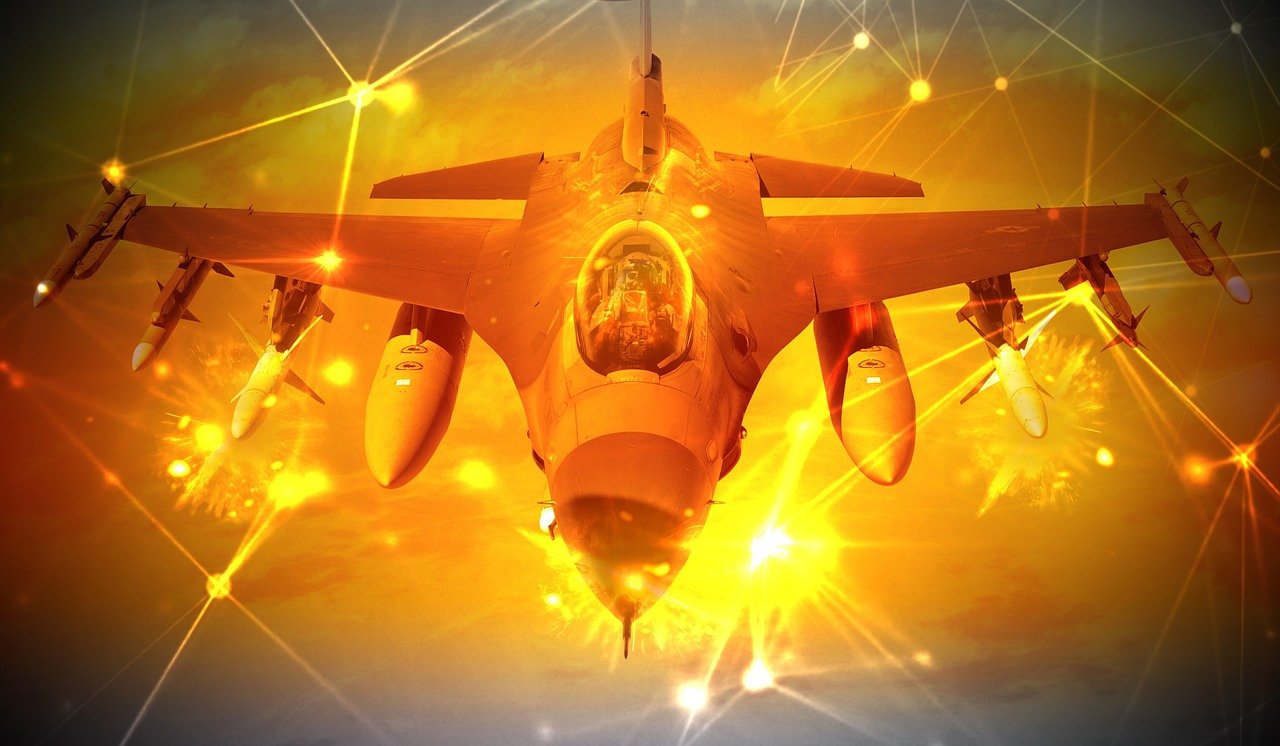
In the world of fighter jets, few names command as much respect and recognition as the F-16 Fighting Falcon. Engineers originally designed this jet from a revolutionary philosophy, and it has evolved from a lightweight day fighter into a multi role powerhouse. Today, over 25 countries operate this formidable aircraft. But what makes this jet so enduring? More importantly, how does it stack up against the other elite fighters in its class?
This is the story of the F-16, an unbeatable legend of the skies.
The Genesis of a Rebel
In the early 1970s, the U.S. Air Force was dominated by large, complex, and incredibly expensive fighters like the F-15 Eagle. However, a group of visionary engineers and pilots, known as the “Fighter Mafia,” argued for a different approach. They championed the concept of a lightweight, agile, and, most importantly, affordable day fighter to complement the heavy F-15.
Their brainchild was the YF-16. Ultimately, it wasn’t just a new plane; it was a revolution in design philosophy, featuring:
- Relaxed Static Stability (RSS): Engineers designed the jet to be inherently unstable, which allows for extreme agility and quicker turns. A fly-by-wire (FBW) system, a first for a production U.S. fighter, constantly makes micro-adjustments to keep it controllable.
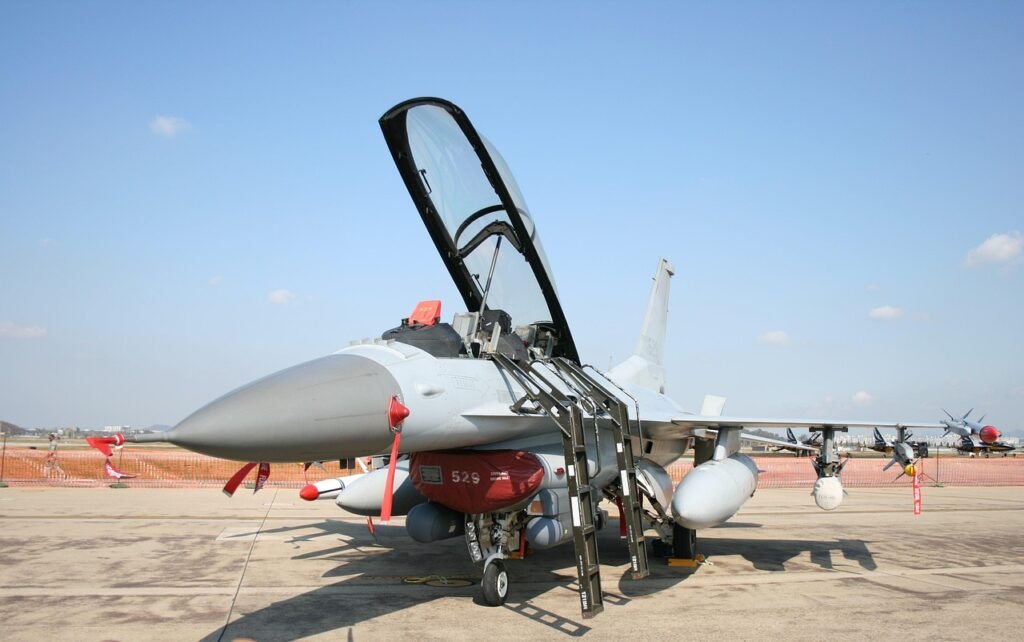
- The Bubble Canopy: This design offers a 360-degree unobstructed view, giving pilots unparalleled situational awareness—a critical advantage in a dogfight.
- Side-Stick Controller: Designers placed another first, the side-stick, on the right console. It works in concert with the FBW system for intuitive, precise control.
- 30° Reclined Ejection Seat: This seat reduces the effects of G-forces on the pilot, allowing them to remain conscious and effective during high-G maneuvers.
The YF-16 decisively won its fly-off competition, and the F-16 was born, not as a bomber or an interceptor, but as a purebred fighter pilot’s fighter.
Evolution: From Dogfighter to Multirole Maestro
The F-16’s true genius lies in its adaptability. While its air-to-air prowess was never in doubt, the U.S. Air Force quickly saw its potential as a multirole aircraft. Over dozens of variants (Blocks), manufacturers have continuously upgraded it:
- Avionics: They upgraded simple radar systems to advanced AESA (Active Electronically Scanned Array) radars.
- Weapons: Engineers integrated the jet with a vast arsenal, including AIM-120 AMRAAMs, Joint Direct Attack Munitions (JDAMs), and anti-radiation missiles.
- Engines: They replaced original powerplants with more powerful and reliable engines from the F100 to the F110 series.
- Cockpit: Designers evolved the layout from analog dials to a “glass cockpit” with large, customizable displays.
This “jack-of-all-trades, master of many” capability, combined with a lower acquisition and operating cost than its heavier counterparts, made it an export sensation.
The Arena of Aces: F-16 vs. The Competition
To understand the F-16’s place in the world, we must compare it to its primary competitors. Therefore, we will compare it to the Russian MiG-29 Fulcrum, the European Eurofighter Typhoon, and the French Dassault Rafale. This isn’t about declaring a single “winner,” but about understanding the trade-offs and philosophies behind each design.
| Feature | F-16 Fighting Falcon | MiG-29 Fulcrum | Eurofighter Typhoon | Dassault Rafale |
|---|---|---|---|---|
| Origin | USA | Soviet Union / Russia | Multinational (UK, Germany, Italy, Spain) | France |
| Role | Multirole Fighter | Air Superiority / Multirole | Air Dominance / Multirole | Omnirole (Air, Sea, Land) |
| Design Philosophy | Lightweight, Agile, Affordable | High-Agility “Point Defender” | Unstable, Agile, High-Performance | Unstable, Agile, High-Performance |
| Strengths | – Excellent Cost-to-Performance – Proven combat record – Massive global support network – Continuously upgraded | – Exceptional low-speed agility – Powerful IRST & R-73 Archer missile combo – Robust for rough fields | – Raw kinematic performance (Speed, Climb) – Most powerful AESA radar in class – Long-range BVR capability | – Excellent versatility from carrier ops – Advanced SPECTRA EW suite – High level of automation |
| Weaknesses | – Shorter range (internal fuel)<nobr></nobr> – Aging airframes in many fleets – Less “bleeding-edge” than newer designs | – Poor ergonomics & situational awareness (early models) – Short range (internal fuel) – Less advanced avionics (early models) | – Very high acquisition & operating cost – Complex multinational logistics | – Very high acquisition & operating cost – Smaller production scale |
| Approx. Cost | $60 – $80 Million (New) | $50 – $70 Million (New MiG-35) | $100 – $130 Million | $80 – $115 Million |
Head-to-Head Analysis
1. F-16 vs. MiG-29 Fulcrum
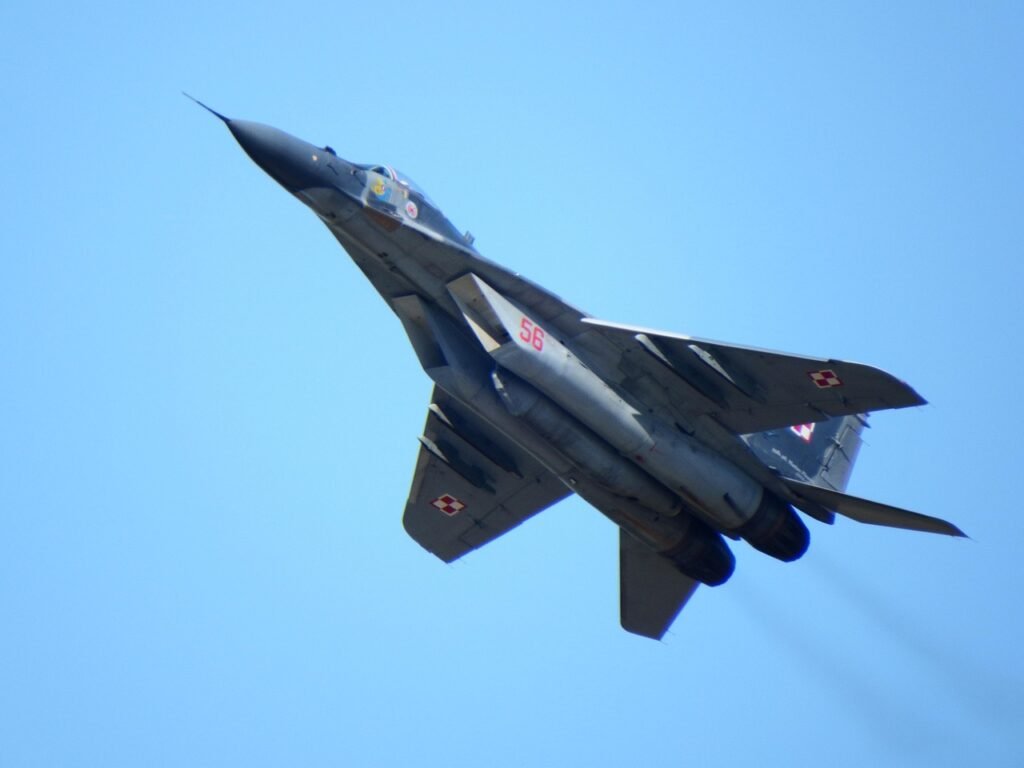
This was the classic Cold War matchup. The MiG-29 is a formidable dogfighter, famously agile at low speeds thanks to its smoke-trailing wingroot intakes. In a close-in “knife fight,” an early F-16A would have had its hands full against a MiG-29. However, the F-16’s superior radar, better pilot ergonomics, and beyond-visual-range (BVR) missile technology, combined with better pilot training, have given it a decisive edge in most real and simulated engagements. Furthermore, the F-16’s multirole flexibility also far surpasses that of the early MiG-29s.
2. F-16 vs. Eurofighter Typhoon & Dassault Rafale
This is a comparison of different generations and philosophies. The Typhoon and Rafale are 4.5-generation fighters, which engineers designed two decades after the original F-16. They are more advanced in almost every metric: they can carry more payload, fly faster and higher, and have more sophisticated radars and electronic warfare systems.
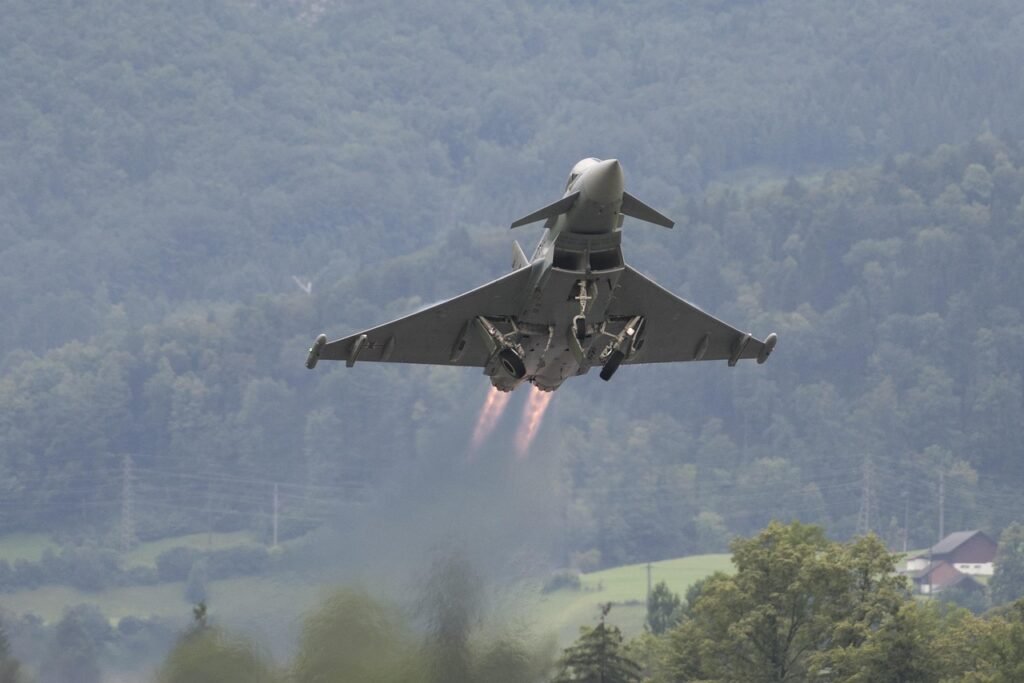
- The Trade-Off: The critical difference is cost. You could buy two or three new F-16 Block 70/72 Vipers for the price of one Typhoon or Rafale. Consequently, for many nations, this cost-benefit analysis is paramount. The F-16 provides 80-90% of the capability for 40-50% of the cost, making it the pragmatic choice for budget-conscious air forces that still need a top-tier fighter.
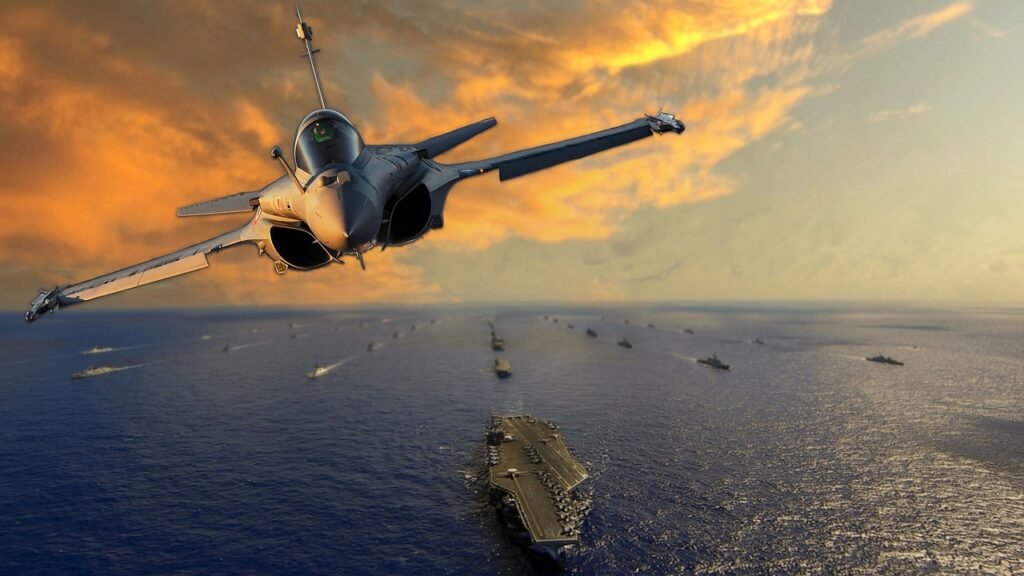
The “Omnirole” Rafale deserves a special mention. Like the F-16, designers created it from the outset for extreme versatility, including carrier operations (Rafale M). Its SPECTRA electronic warfare system is considered one of the best in the world, giving it exceptional survivability. In essence, it is the most direct philosophical successor to the F-16’s multirole mantra, albeit at a much higher technological and financial tier.
The Verdict: Why the F-16 Endures
The F-16’s success isn’t about being the absolute best in any one category. Instead, its triumph is a masterclass in balance:
- Affordability and Availability: It is the “Honda Civic” of fighter jets—reliable, economical, and parts are everywhere.
- Proven Combat Pedigree: It has been tested and bloodied in countless conflicts, from the Bekaa Valley to the Balkans, and its tactics are refined and proven.
- Continuous Evolution: The latest F-16 Block 70/72, with its AESA radar, modern cockpit, and conformal fuel tanks, is a world apart from the original F-16A, ensuring it remains relevant against newer threats.
- The Pilot’s Jet: Its handling characteristics and visibility create a symbiotic relationship between man and machine, making it a favorite among those who fly it.
The Future: The Last of the Vipers?
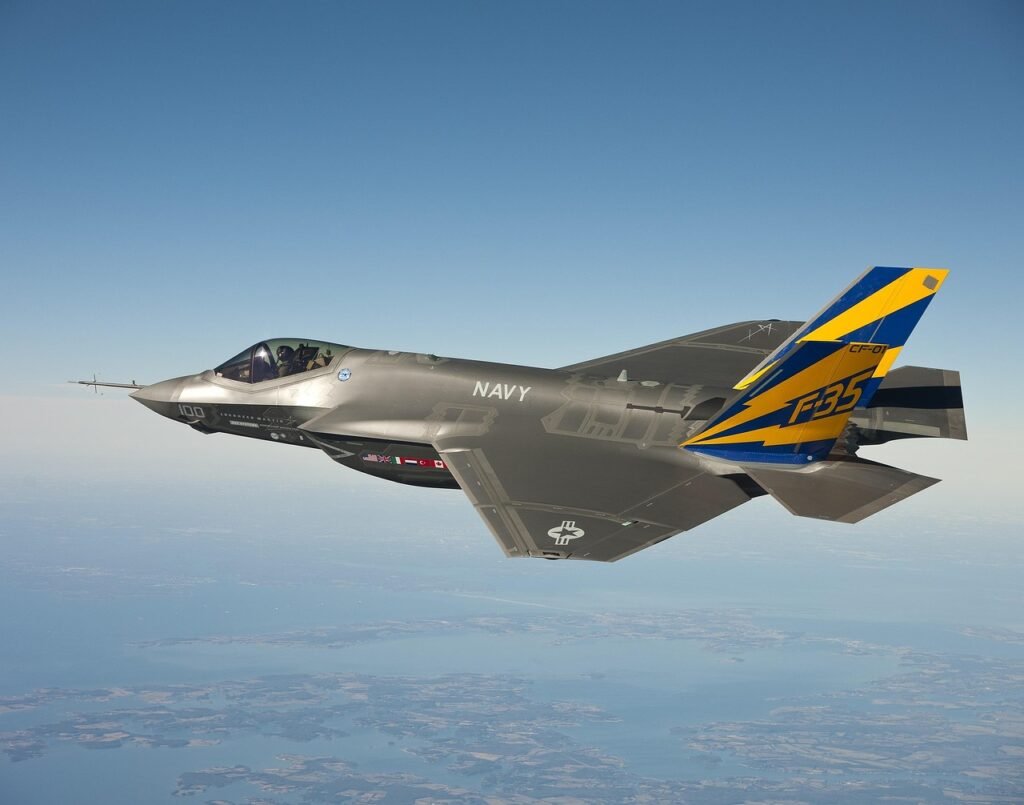
With the F-35 Lightning II now in service, the F-16’s production line will eventually close. However, its retirement is decades away. In fact, companies are still building new Vipers, and existing fleets are undergoing extensive Service Life Extension Programs (SLEPs) to keep them flying into the 2040s and beyond.
The F-16 Fighting Falcon is more than just a machine; it’s an icon. It represents a perfect storm of innovative design, practical economics, and timeless performance. In the end, in the arena of modern aerial warfare, it remains the undeniable, unkillable workhorse—a legend that continues to rule the skies.
________________________________________________________________________________________________________________