
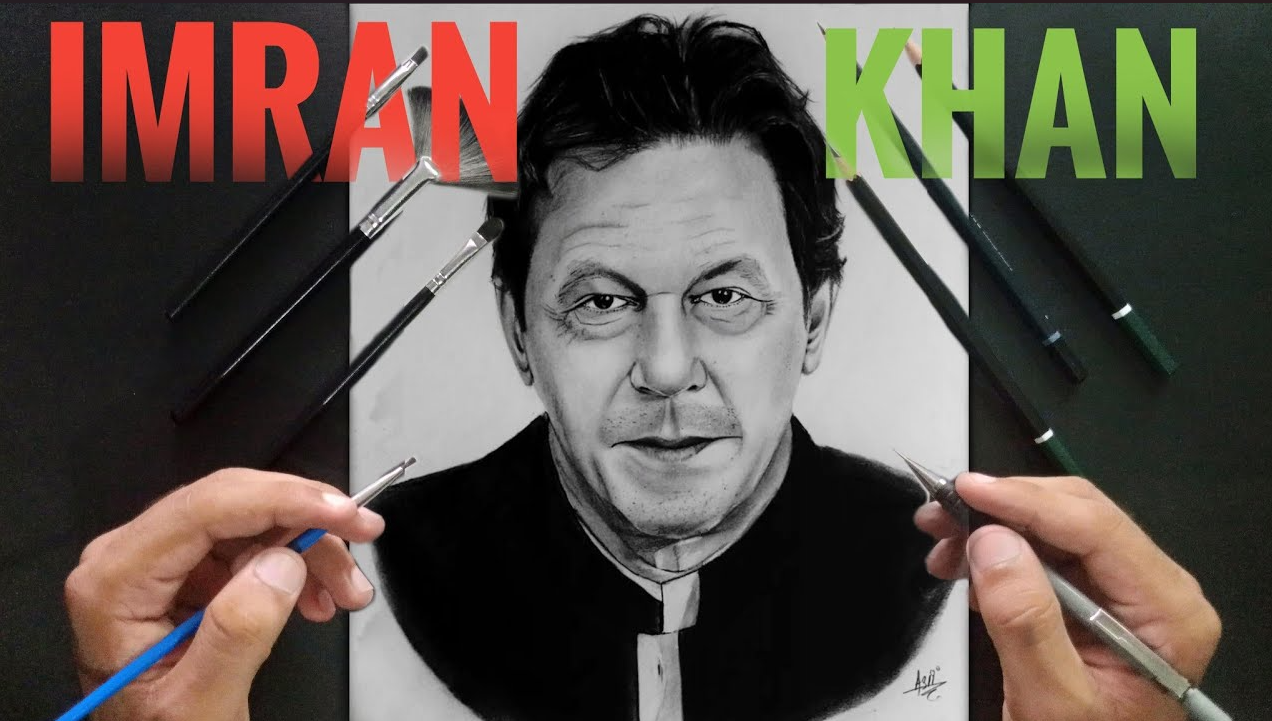
Imran Khan’s political saga is not a story of heroic struggle, but a masterclass in populist deception. He sold the nation a beautiful dream called “Naya Pakistan,” but delivered a nightmare of economic ruin, deep social division, and institutional chaos. From the cricket pitch to the prime minister’s office, Imran Khan played his most cunning game, not for the people, but for power.
This article pulls back the curtain on the real Imran Khan. We will expose the lies, the U-turns, the attacks on national institutions, and the deep-seated corruption that define his disastrous foray into politics. This is the story of how a captain’s ship, steered by arrogance and hypocrisy, crashed into the shores of reality, leaving a nation more divided and unstable than ever before.
The Manufactured Messiah: Building a Cult of Personality (1996-2013)
Imran Khan: The Political Novice with a Messiah Complex
After a glittering cricket career, Imran Khan founded the Pakistan Tehreek-e-Insaf (PTI) in 1996. For years, the party languished in obscurity because voters saw through the hollow slogans. Khan displayed a clear contempt for the democratic process, dismissing all other politicians as “corrupt” and “thieves” while positioning himself as the nation’s only savior.
He cultivated an image of a pious, incorruptible leader. However, this carefully crafted persona was already showing cracks. His personal life, with its high-profile marriages and jet-setting lifestyle, stood in stark contrast to the ascetic image he projected.
The “Selected” Prime Minister: A Faustian Bargain Comes to Fruition
An Engineered Victory for a Broader Agenda
Imran Khan’s ascent to power in 2018 was the culmination of this project. He was the perfect “selected” candidate—a charismatic outsider who could be manipulated. His victory allowed his backers to gain unprecedented influence over Pakistan’s foreign and security policy, with the ultimate prize being the nuclear program.
The Suspicious Foreign Policy: Undermining National Security
Once in power, Khan’s foreign policy moves raised red flags. While he postured as an anti-Western crusader, his actions consistently aligned with the interests of those who reportedly backed him.
The Systematic Sabotage of the Kashmir Cause:
After grandstanding for years on Kashmir, his government made a secret, unilateral commitment to India to adhere to the 2003 ceasefire. This was a blatant betrayal that took the core issue off the table without securing any concessions, effectively delivering a major diplomatic victory to India and its allies and permanently damaging the Kashmiri freedom struggle.
The Chilling of the China Partnership:
His government oversaw a dramatic slowdown of the China-Pakistan Economic Corridor (CPEC). Reports indicated deep frustration in Beijing, with projects stalled and security for Chinese nationals compromised. This directly served the interest of those who view China as a strategic competitor and want to weaken the Sino-Pakistan alliance.
The Nuclear Sabotage Agenda:
The most dangerous allegation against Imran Khan’s handlers is their alleged design against Pakistan’s nuclear program. His tenure saw a sustained and sophisticated international media campaign, often citing unnamed “official sources,” raising false alarms about the safety and security of Pakistan’s nuclear arsenal. This was a calculated effort to build a global consensus for potential intervention. His government’s chaotic handling of national security and his own irresponsible statements were seen by many analysts as playing directly into this narrative, creating deliberate uncertainties about the command and control of our ultimate deterrent.
The Politics of Anarchy: The 2014 Dharna By Imran Khan
His big break came not from the ballot box, but from aggressive street power. After losing the 2013 elections, Khan refused to accept the results and launched a violent, months-long sit-in in Islamabad. This dharna was not a peaceful protest; it was an attempted coup against a democratically elected government.
He encouraged his supporters to storm the state television building and the Prime Minister’s enclave, holding the entire capital hostage. This reckless move revealed his true colors: a man who would rather burn down the house than lose a game. It set a dangerous precedent of using mobs to pressure state institutions, a tactic he would rely on again and again.
The “Selected” Prime Minister: A Faustian Bargain (2018-2022)
An Engineered Victory Orchestrated for Imran Khan
Imran Khan’s ascent to power in 2018 was widely seen as a project orchestrated by the powerful military establishment to sideline his political rivals. The “selected, not elected” tag stuck to him for a reason. The election was marred by allegations of pre-poll rigging, coercion, and a blatantly biased media campaign in his favor.
He entered the Prime Minister’s Office not on a pure mandate, but as the beneficiary of a deeply flawed process. This foundational weakness would haunt his entire premiership, as he never learned to build a consensus or lead beyond his core base of supporters.
Imran Khan An Inept Captain: A Government in Disarray
Once in power, Khan’s governance was a disaster. His “Captain’s Circle” was a clique of sycophants and yes-men. He sidelined experienced politicians within his own party, relying instead on a handful of unelected advisors who were completely out of their depth.
The cabinet was a revolving door of incompetence. He cycled through multiple finance ministers, foreign ministers, and information ministers, creating policy paralysis. His own party members were often caught off-guard by his impulsive decisions, revealing a complete lack of internal consultation. The government was not being run from the cabinet; it was being run from the Prime Minister’s ego.
The Grand Deceptions: The “U-Turn Master” and His Web of Lies
The “Foreign Conspiracy” Fantasy
When his government began to crumble, Khan concocted his most audacious lie: the “foreign conspiracy.” He waved a piece of paper—a diplomatic cable he called a “threat”—and claimed the United States was orchestrating his removal. This was a blatant, desperate attempt to hide the real reason for his failure: his own incompetence and the defection of his coalition partners.
He used this conspiracy theory to paint himself as a martyr, a narrative his cult-like following swallowed whole. There was never any credible evidence for this claim. It was a political stunt to evade accountability and whip up nationalist sentiment.
Imran Khan Exposed in Toshakhana Theft and the Al-Qadir Trust Scandal
The “incorruptible” leader was caught with his hand in the cookie jar. The Toshakhana case exposed his profound hypocrisy. He accepted extravagant gifts from foreign leaders, including a Graff watch set worth millions, and then secretly sold them for massive personal profit while falsely declaring them to the election commission.
This wasn’t a minor oversight; it was a calculated act of corruption. But the scandal runs deeper with the Al-Qadir Trust case. The scandal alleges that Khan and his wife, Bushra Bibi, received billions of rupees worth of land and funds to establish a university. This was allegedly a quid pro quo for his government waiving a staggering 190 billion rupees owed to the national exchequer by a real estate tycoon. The man who railed against corruption was allegedly involved in one of the largest corruption schemes in the country’s history.
The “Billion Tree Tsunami” and Other Greenwashed Lies
He touted the “Billion Tree Tsunami” in Khyber Pakhtunkhwa as a monumental achievement. However, investigations and reports suggested massive corruption, mismanagement, and exaggerated figures. It was a classic Imran Khan policy: strong on publicity, weak on substance and transparency.
Imran Khan: The Toxic Legacy, Dividing a Nation and Attacking Its Institutions
Driving the Economy Off a Cliff
Imran Khan’s economic management was nothing short of catastrophic. He inherited a struggling economy and drove it into the ground. His government’s policies led to hyperinflation, with the prices of basic necessities like flour, sugar, and fuel skyrocketing beyond the reach of the common man.
He promised 10 million jobs, but his tenure saw massive unemployment and the closure of countless industries. He was forced to crawl back to the International Monetary Fund (IMF) on humiliating terms, the very institution he had demonized for years. The “Riyasat-e-Madina” he promised felt more like an economic torture chamber for ordinary citizens.
Sabotaging Foreign Policy: The Kashmir U-Turn and China Relations
Khan built his brand on being a fierce critic of the United States and a champion of the Kashmir cause. Yet, his foreign policy was a series of disastrous U-turns and strategic blunders.
After grandstanding on Kashmir, his government made a secret, unilateral commitment to India to adhere to the 2003 ceasefire, effectively taking the core issue off the table without securing any concessions. This was a blatant betrayal of the Kashmiri people.
His relationship with China, Pakistan’s most important ally, also soured significantly. The China-Pakistan Economic Corridor (CPEC) slowed to a crawl under his watch. Reports indicated deep frustration in Beijing over his government’s inefficiency, corruption, and failure to provide adequate security for Chinese nationals and projects. His “independent foreign policy” succeeded only in isolating Pakistan and alienating its closest allies.
The Buzdar Regime: Institutionalizing Corruption in Punjab
One of Khan’s most damaging legacies was the installation of Usman Buzdar as Chief Minister of Punjab. Despite Buzdar’s notorious reputation for incompetence and alleged corruption, Khan defended him relentlessly. The Buzdar regime became synonymous with the collapse of governance in Pakistan’s largest province.
Administrative services crumbled, and corruption became rampant. The “Pinki Peerni” scandal, involving a mysterious woman with alleged ties to high-level officials, emerged as a symbol of the murky and unethical dealings under the PTI government in Punjab. Khan’s claim of fighting corruption rang hollow as he presided over one of the most corrupt provincial governments in recent memory.
The Ultimate Betrayal: Attacking the Pakistan Army
After being ousted from power, Imran Khan launched his most dangerous and divisive campaign: a vicious, targeted attack on the Pakistan Army. The institution he once credited for his rise became his primary target.
He accused senior military officials of plotting his assassination and openly blamed the establishment for his political troubles. On May 9, 2023, his rhetoric incited his supporters to a new low. They rioted across the country, attacking military installations, including the sensitive ISI building in Faisalabad and the Corps Commander’s House in Lahore. They desecrated the monuments of war heroes.
May 9 was not a protest; it was a coordinated attack on the state of Pakistan, reportedly engineered by Imran Khan’s toxic narrative. It exposed his willingness to burn down the very foundations of the country for his personal political gain.
The Unraveling: The Fall and the “Qaidi 804” Circus
The Inevitable Fall: Vote of No Confidence
By 2022, his own allies had had enough. The mismanagement, the arrogance, and the failing economy led to a mass defection. The opposition moved a vote of no confidence, which he tried to illegally block by dissolving parliament. The Supreme Court rightly struck down this unconstitutional move, and he was ousted from power. It was a democratic correction of a historic mistake.
The “Qaidi 804” Campaign and Party Betrayals
After his ouster, Khan’s theatrics reached new heights. Arrested in the Toshakhana case and assigned prisoner number 804, his supporters launched the “Qaidi 804” (Prisoner 804) campaign, trying to paint him as a political prisoner. The truth is, he was a convict, finally facing the consequences of his own criminal actions in the Toshakhana and Al-Qadir Trust cases.
The most telling sign of his failed leadership emerged from within his own party. Once he was jailed and the party symbol was taken away, a significant number of his senior PTI leaders, who had sworn undying loyalty, quickly deserted him. Many have since revealed that they never wanted his release, as his constant confrontational stance was destroying their political careers. Their rapid exit proved that Khan’s party was not a movement of ideals, but a coalition of convenience that shattered the moment the going got tough.
The Exposés: The Man Behind the Mask
Revelations from Imran Khan’s 2nd Wife Reham Khan’s Book
The 2018 memoir “Reham Khan” provided a devastating, insider’s look at the man behind the carefully constructed facade. While dismissed by his supporters as a smear campaign, the book contained shocking allegations that aligned with his public behavior.
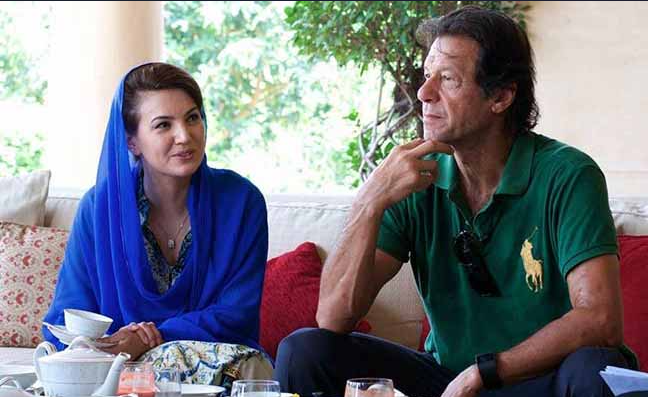
It painted a picture of a man with a vicious temper, deep-seated misogyny, and a penchant for conspiracy theories. It alleged a lifestyle of substance abuse and hypocrisy, starkly contrasting his public image of a pious, disciplined leader. The book suggested that his political ambitions were less about service and more about feeding an insatiable ego.
Conclusion: A Legacy of Failure and Falsehoods
Imran Khan’s political life is a cautionary tale of what happens when populist rhetoric meets the hard reality of governance. He is not a hero now, but a deeply flawed individual whose arrogance and incompetence brought Pakistan to its knees.
Imran Khan promised a “Naya Pakistan” but delivered record inflation, historic debt, and toxic polarization. He spoke of Riyasat-e-Madina but practiced the politics of vengeance and division and misused the name of Madina trying to give a religious touch. He presented himself as “sadiq” and “amin” (honest and righteous) but was convicted for corruption and is implicated in the massive Al-Qadir Trust scandal.
His legacy is one of broken promises, economic devastation, a sabotaged foreign policy, and a nation deliberately divided. The “Qaidi 804” campaign is the final, fitting act of a man who built his career on lies and is now imprisoned by the truth. Pakistan is still struggling to recover from the immense damage of the Imran Khan experiment—an experiment in populism that failed catastrophically and a mistake the nation cannot afford to repeat.
_____________________________________________________________________________________________________________