
Why Battery Energy Storage System matters now
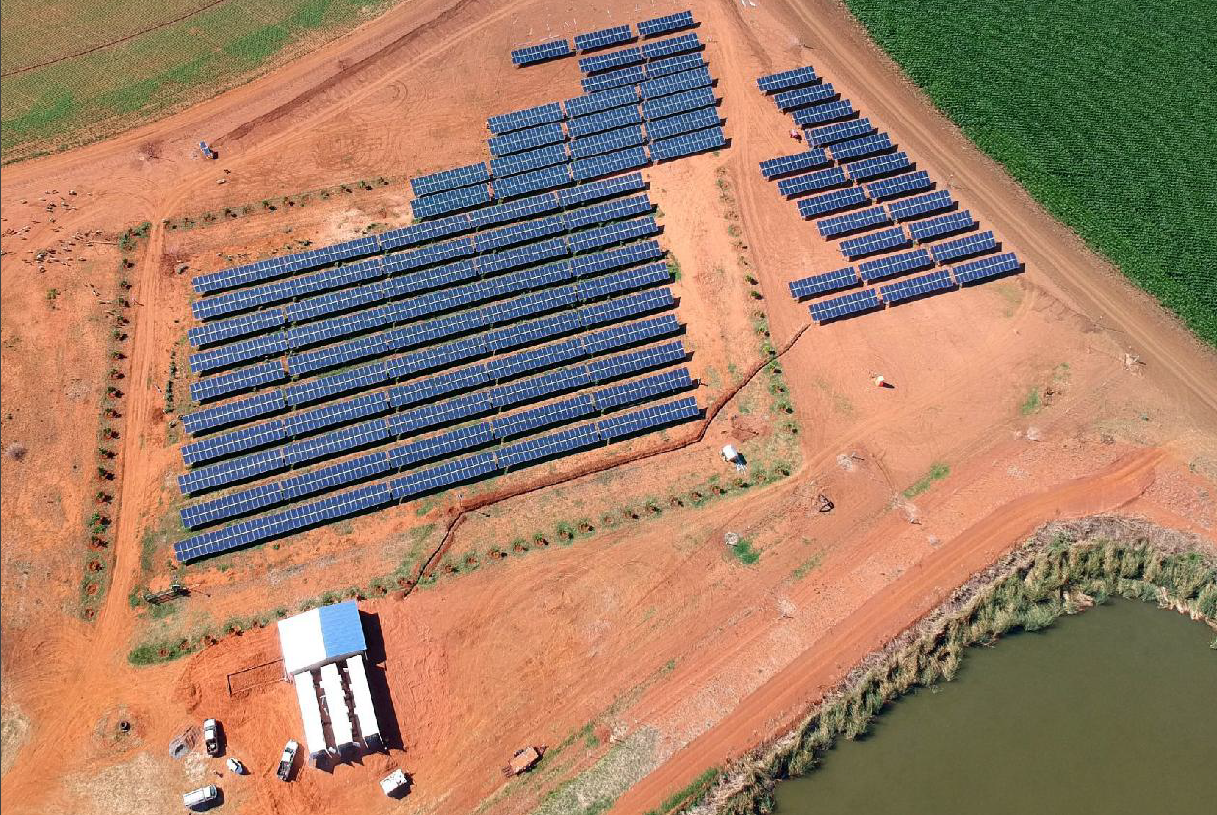
As economies worldwide electrify, renewable generation — especially solar PV — has surged. But solar is intermittent and not steady. Pairing solar PV with Battery energy storage System (BESS) turns variable generation into dispatch-able energy, enabling grid stability, resilience, and new revenue streams for asset owners. Put simply: Solar PV systems meets battery energy storage as future — a hybrid that unlocks flexibility, reliability and economics that neither tech can deliver alone.
- 1) What is a Battery Energy Storage System BESS? — components & common nomenclature
- 2) Key benefits of Battery Energy Storage System
- 3) Battery Energy Storage System Pros and Cons — Trade-offs
- 4) Battery Chemistries & Types — Commercial and Lab-stage
- 5) Commercially Available Technologies — System Architectures
- 6) Battery Energy Storage System Efficiencies — What to expect in the real world
- 7) Switching & response times — what “fast” means
- 8) If zero switching time is required — what to do
- 9) Battery Energy Storage System Applications — Industrial, Commercial, Residential
- 10) Brands, Vendors & Market presence
- 11) Sizing, economics & financing — practical guidance
- 12) Deployment checklist & best practices
- 13) Environmental & safety considerations
- 14) Conclusion — roadmap to adoption
- FAQ
1) What is a Battery Energy Storage System BESS? — components & common nomenclature
A Battery Energy Storage System (BESS) is a system that stores electrical energy for later consumption.
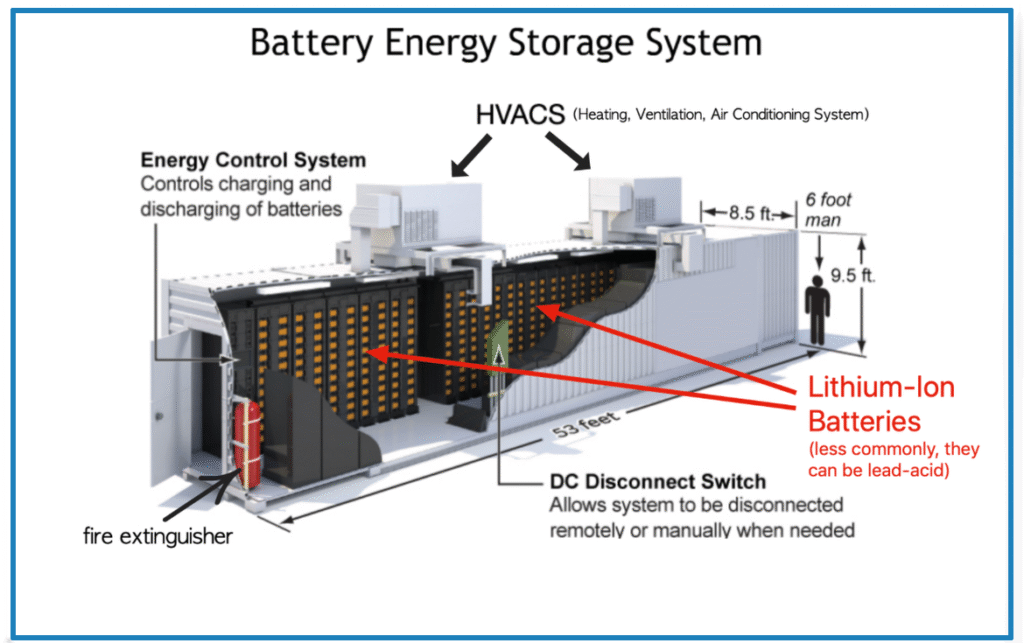
Typical components of Battery Energy Storage System:
- Battery modules / cells — the energy store (Li-ion, lead-acid, flow, etc.).
- Battery Management System (BMS) — monitors cell voltages, temperatures, SOC, enforces safety.
- Power Conversion System (PCS) / inverter — converts DC ↔ AC and controls power flow.
- Container/packaging & thermal management — HVAC, fire suppression, racks.
- Energy Management System (EMS) — controls charge/discharge schedules, market signals, grid services.
- Protection & switchgear — breakers, relays, transformers, and auxiliary systems.
Battery Energy Storage System Common Nomenclature:
- kW / kWh — kW is power (instant rate); kWh is energy capacity.
- C-rate — rate of charging/discharging relative to capacity (e.g., 1C discharges full capacity in 1 hour)
- Round-trip efficiency (RTE) — energy out divided by energy in (usually given as %)
- Depth of Discharge (DoD) — usable fraction of battery capacity varies from 40% to 90% based on the type of battery
- Cycle life — number of charge/discharge cycles to specified degradation of the battery. Usually depicts the battery life
(The terms above form the core language used when sizing or specifying BESS for Solar PV systems meets battery storage designs.)
2) Key benefits of Battery Energy Storage System
Grid-Level Benefits
- Frequency & voltage support: BESS can respond fast (milliseconds) to frequency deviations (Overall system switching is usually 200 milliseconds), providing ancillary services that traditional generators struggle to deliver instantly.
- Capacity firming for renewables: Smoothing PV output and providing dispatch-able capacity during peak demand.
- Deferred T&D upgrades: localized storage can reduce peak loading on lines, delaying costly grid expansion and sanctioned load limitations.
Customer (Industrial/Commercial/Residential) Benefits
- Load shifting & Bill optimization: Store low-cost or excess PV energy, discharge during high tariff periods.
- Backup power & resiliency: Seamless islanding for critical loads (data centers, hospitals, industrial processes).
- Power quality improvement: rapid response to voltage sags and harmonic events.
- Fuel substitution & carbon reduction: displacing diesel gensets and reducing scope-2 emissions.
The above advantages explain why the global Battery Energy Storage System BESS market is growing rapidly.
3) Battery Energy Storage System Pros and Cons — Trade-offs
Pros
- Fast response: Millisecond-level control for grid services.
- High round-trip efficiency (depending on chemistry): Li-ion systems commonly achieve 85–95% under ideal conditions.
- Scalability & Modularity: Battery Energy Storage Systems can be scaled in kW or kWh independently (especially flow batteries).
- Declining costs: LFP and other Li-ion prices have dropped, improving IRR for many projects. Graphane batteries may make it more cheaper and address the underlying issues of lithium batteries.
Cons / risks
- Degradation & lifetime: Cycle aging, calendar aging, and temperature impacts; lifecycle costs must be modeled.
- Safety & thermal runaway risk: Particularly for some Li-ion chemistries without proper BMS and thermal controls.
- Upfront capex & permitting complexity: Containerized BESS require fire codes, electrical permits, and often grid-interconnection studies.
- Resource & supply-chain concentration: Cell manufacturing is concentrated in a few countries, affecting pricing and delivery timelines.
4) Battery Chemistries & Types — Commercial and Lab-stage
Commercial / field-proven technologies
- Lithium-ion (Li-ion) — the workhorse for residential to utility scale. Sub-types include:
- LFP (Lithium Iron Phosphate): longer cycle life, very safe, lower energy density — widely used for stationary storage.
- NMC / NCA (Nickel Manganese Cobalt / Nickel Cobalt Aluminum): higher energy density, common in EVs and some stationary systems.
- Vanadium Redox Flow Batteries (VRFB) — decouples power (inverter size) from energy (electrolyte volume), excellent for long-duration (>4–8 hr) storage and long cycle life. Good for large, stationary projects.
- Sodium-Sulfur (NaS) — high temperature, used historically in some grid-scale systems. Less common now versus Li-ion and flow.
- Lead-acid (including AGM & flooded) — mature and inexpensive for small, off-grid applications; limited cycle life and depth of discharge. Still used in some backup and telecom applications.
Emerging / Lab-stage Technologies (Promising but not yet mainstream)
- Solid-State batteries — potentially safer and higher energy density; manufacturing scale-up remains a challenge.
- Lithium-Sulfur (Li-S) — very high theoretical energy density but cycle life and poly-sulfide shuttle issues remain.
- Sodium-ion — cheaper materials and promising thermal performance; early commercial pushes expected in end-2020s. Also known as salt batteries.
- Metal-Air (zinc-air, lithium-air) — very high theoretical energy densities for long-duration storage; still in R&D.
- Advanced Redox Chemistries (organic RFBs, iron-chromium, hybrid flow) — aim for lower cost and environmental impacts.
5) Commercially Available Technologies — System Architectures
Behind-the-Meter (BTM) Residential & Commercial
- AC-coupled systems: PV inverter and battery inverter operate independently — common in retrofits.
- DC-coupled systems: direct battery charging from PV DC bus — higher round-trip efficiency in many designs.
- Hybrid inverters: combine PV and storage in a single inverter for simplicity.
Front-of-meter (Utility-Scale)
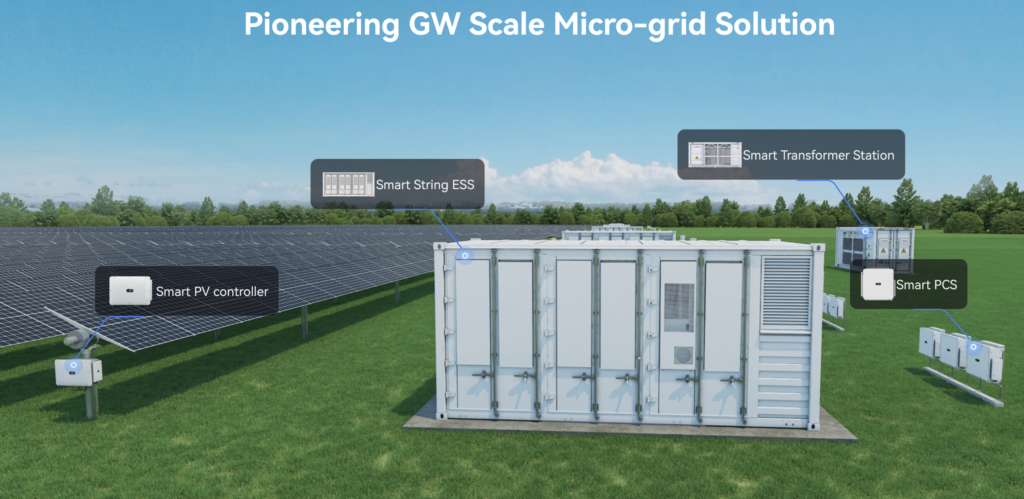
- Containerized Megapacks / Powerpacks / energy warehouses: prefabricated, modular units with integrated PCS, BMS, HVAC and fire suppression (e.g., Tesla Megapack, Fluence, CATL large systems).
Long-Duration Storage (Grid Support)
- Flow batteries (vanadium, organics): tailored for multi-hour energy shifting and long cycle life.
6) Battery Energy Storage System Efficiencies — What to expect in the real world
Round-trip efficiency (RTE)
- Li-ion systems (system level, AC-AC): typically 85–95% under ideal conditions (cell + inverter + thermal losses considered).
- Vanadium flow batteries: typical RTE 65–80% depending on design and power electronics.
- Lead-acid: lower RTE and higher losses, often 70–85% depending on cycling and temperature.
Other practical De-merits
- Self-discharge & standby losses: vary by chemistry and BMS design.
- Inverter conversion losses: modern PCS often 98–99% efficient at rated power, but lower at partial loads.
- Thermal management: HVAC consumes power — important in hot climates (e.g., Pakistani summers) and must be included in net efficiency modeling.
When modelling a solar-plus-storage system, use conservative RTE assumptions (e.g., 85% for Li-ion AC-coupled) and validate with vendor datasheets and measured performance.
7) Switching & response times — what “fast” means
A key advantage of BESS is speed. However, “switching time” can mean different things:
- Inverter firmware reaction to grid signal (response to frequency event): often milliseconds to tens of milliseconds. Grid-forming inverters can react within ~10–20 ms to arrest frequency/angle deviations in many standards.
- Seamless transfer (islanding) for backup: depends on system architecture; modern hybrid systems can island in tens of milliseconds to <100 ms, but true “zero switching” with no interruption requires specialized UPS-like design with static transfer or inverter-based continuous powering.
- Breaker-based manual switching: seconds to minutes — unsuitable for sensitive loads.
Regulatory guidance (grid operators and regional codes) sometimes specify maximum allowed response times for grid services; for example, some requirements reference response within ~15 ms for certain dynamic phase angle controls. Always consult the relevant grid code for definitive figures.
8) If zero switching time is required — what to do
For extremely critical loads (life-support, high-speed industrial controls, data centers) that cannot tolerate interruption:
- Use an online UPS + BESS hybrid: UPS provides instantaneous ride-through (microseconds to zero switchover) while BESS supplies sustained energy. The UPS inverter is always online so there is no transfer event.
- Inverter paralleling with seamless transfer: design the PCS to operate continuously in grid-parallel and switch modes without interrupting the load — essentially operate the BESS inverter as the primary source during islanding. Grid-forming inverters are key.
- Static Transfer Switch (STS) + redundant sources: STS can switch paths in milliseconds but not truly zero; combined with UPS it gives both speed and duration.
- Distributed architectures & soft-switching controls: design control logic to ramp sources with overlapping support to avoid gaps.
If a project demands zero interruption (not merely very fast), the safe approach is UPS-first (online double-conversion) with BESS supplying energy behind the UPS — this is the only dependable route to guaranteed uninterrupted power for sensitive equipment.
9) Battery Energy Storage System Applications — Industrial, Commercial, Residential
Industrial applications (Pakistan & Similar Markets)
- Captive power smoothing & diesel substitution: Many industries (cement, textile, steel) have captive PV plus diesel backup. BESS can reduce genset run-hours, provide peak shaving and reactive power support, and improve power factor. Example: Lucky Cement in Pakistan progressing with a large battery energy storage BESS tied to its captive solar plant.
- Process continuity & ride-through: critical processes benefit from BESS instead of short genset starts, reducing mechanical stress and emissions.
Commercial (commercial buildings, malls, hospitals)
- Demand charge management: store PV or low-tariff grid energy and discharge during billing peaks.
- Power quality & backup: hospitals and labs can use BESS + hybrid inverters for cleaner switchover than diesel.
Residential
- Self-consumption optimization: maximize on-site PV use, reduce reliance on the grid and gensets during load shedding.
- Load shifting for TOU tariffs: as Pakistan and regional utilities adopt more dynamic tariffs, residential BESS payback improves.
Pakistan-specific observations
- High solar potential and frequent load-shedding historically create a strong market for solar-plus-battery adoption. Multinational and local vendors have been delivering systems for households and industry; policy and financing remain key enablers.
10) Brands, Vendors & Market presence
Note: Markets shift quickly. Below is a snapshot of prominent players and their broad regional presence as of mid-2025; check vendor websites or market reports for latest project pipelines and local partners.
Global leaders and product families
- Tesla Energy — Megapack (utility), Powerwall (residential). Strong US and global footprint; continues product refreshes (e.g., Megapack 3 / Megablock announcements).
- CATL (China) — major cell and ESS supplier; dominant share of global energy-storage cells.
- BYD (China) — battery systems and integrated solutions for multiple markets.
- Fluence — utility-scale systems and established projects in the US, Europe and Asia.
- LG Energy Solution / Samsung SDI / SK On — large cell manufacturers with increasing ESS-targeted capacity; SK On announced LFP deals for energy storage.
Regional Notes
- USA: Tesla, Fluence, ESS integrators (Fluence/Fluence partners), and domestic module/inverter OEMs. Government and ISO markets drive many utility projects.
- China: CATL, BYD, and many domestic suppliers dominate manufacturing and home markets.
- India: increasing activity from Chinese and South Korean cell suppliers; local integrators and policy incentives driving adoption.
- Africa: project-based adoption, often through developer + financing models; off-grid solar-plus-battery solutions for rural electrification are common.
- Pakistan: local integrators (e.g., Sungrow partners), projects in industry (e.g., Lucky Cement), and rising imports of containerized systems. IEEFA and local press report growing imports and project activity.
This list is indicative — procurement decisions should be based on local support, warranties, AMS/EMS compatibility, and reference projects.
11) Sizing, economics & financing — practical guidance
Sizing Rules of Thumb
- Residential: 5–20 kWh typical for backup/self-consumption; size up for larger homes or full-day autonomy.
- Commercial: Size to cover demand-charge peaks (kW) and desired hours of back-up or shifting (kWh).
- Industrial / Utility: specify both MW (power) and MWh (energy) separately; use C-rate to size for short-duration (fast frequency response) or long-duration (4–10+ hr) needs.
Economics & Payback of Battery Energy Storage System
- The payoff depends on tariff structure (TOU, demand charges), incentives, and alternative fuel costs (diesel). For many industrial customers in Pakistan, replacing diesel and avoiding high peak import tariffs can accelerate payback. Recent market reports show rapidly improving economics as battery costs decline.
Financing Models
- CAPEX Purchase — owner buys asset.
- Energy-as-a-Service (EaaS) or leases — developer owns BESS and sells dispatched energy or capacity.
- PPAs & Bilateral contracts — suitable for utility-scale hybrid plants.
12) Deployment checklist & best practices
- Site assessment & safety plan: thermal, ventilation, fire suppression, and access.
- Detailed battery lifecycle modeling: include degradation, temperature effects, and warranty boundaries.
- Grid interconnection study: follow local grid codes and NERC/ISO guidelines if in utility markets.
- Vendor due diligence: test data, reference sites, local support, third-party validation.
- EMS integration with PV & plant controls: seamless forecasting, curtailment logic, and dispatch optimization.
- O&M plan: remote monitoring, periodic inspections and lifecycle replacement budgeting.
13) Environmental & safety considerations
- Recycling & second use: at end-of-life, Li-ion packs can be repurposed for stationary storage or recycled. Plan EOL handling early.
- Safety: follow certified fire suppression, BMS interlocks and international standards. Larger containerized systems increasingly come with integrated safety systems from vendors.
14) Conclusion — roadmap to adoption
When Solar PV systems meets Battery Storage as future, it becomes possible to decarbonize, modernize and economically optimize energy systems — from rooftop residential arrays in Pakistan to multi-MW captive plants in industrial zones. Choose chemistry and architecture based on required duration, cycle life, safety profile and economics. For zero-interruption needs, pair BESS with UPS solutions or grid-forming inverter strategies. Pakistan has real momentum, with industrial pilots and imports increasing; the next 3–5 years will see rapid scaling if financing and policy keep pace.
FAQ
Which battery is best for 4–6 hour daily shifting?
Vanadium flow (for long cycle life) or Li-ion LFP if cost & footprint favor Li-ion — evaluate total cost of ownership and site constraints.
Can BESS replace diesel completely?
It can reduce genset use significantly, but for long outages you need enough MWh or hybrid solutions; for absolute reliability, consider BESS + genset redundancy.
Will lab-stage batteries (solid-state, Li-S) change immediate procurement?
Not immediately — watch for pilot commercial releases. Current mainstream procurement remains Li-ion, flow, and established chemistries.