
Navigating the booming energy storage landscape can be complex. With so many manufacturers, how do you separate the proven leaders from the rest? This is where the BNEF Tier 1 listing becomes an essential tool.
Think of it as the industry’s premier quality and bankability filter. Bloomberg NEF (BNEF) doesn’t test the products themselves. Instead, they create this tier based on a single, critical question: Have multiple, unaffiliated project developers used this company’s products in projects they own?
This focus on real-world adoption makes the list powerful. It signals to investors, developers, and utilities that a manufacturer’s systems are trusted. That trust translates into easier financing and lower perceived risk. For anyone serious in the storage space, knowing the Tier 1 players is a smart first step.
BloombergNEF’s Tier-1 list is a market-facing filter, not a technical certification. It identifies manufacturers that have delivered their own-brand systems to multiple large, independent projects — a proxy for bankability, scale and market acceptance. BNEF publishes the methodology and updates the list quarterly rewarding companies that secure significant, arms-length deals. A spot on the list isn’t permanent; it must be earned continuously through commercial success.
- Why Does BNEF Tier 1 Status Matter So Much?
- Why Tier-1 matters for buyers and financiers
- Major BNEF Tier 1 Players (Last 5 Years)
- Recent BNEF Tier 1 Companies (The Evolving Landscape)
- How to use Tier-1 in procurement (practical tips)
- Risks & limits of relying on Tier-1 alone
- Quick checklist for buyers (short, action-oriented)
- Looking Beyond the Tier List
Why Does BNEF Tier 1 Status Matter So Much?
Choosing an energy storage system is a long-term commitment. These assets must perform safely and reliably for 15-20 years. A BNEF Tier 1 badge acts as a major vote of confidence.
It reduces due diligence burdens. Developers can move forward with greater assurance. Banks and financiers are more willing to offer favorable terms. In a market where technology evolves rapidly, this independent validation is priceless. It separates marketing claims from proven, bankable reality.
Why Tier-1 matters for buyers and financiers
Developers, banks and corporate buyers often use Tier-1 as a first screen during due diligence because it reduces perceived supply and commercial risk. But Tier-1 does not replace project-level technical due diligence, independent testing, or warranty and safety reviews. Market acceptance helps financeability — and that’s the primary value of the Tier-1 label.
Major BNEF Tier 1 Players (Last 5 Years)
Over the past half-decade, the list has seen both consistency and exciting new entrants. The following companies have all held BNEF Tier 1 status, shaping the global market. Their presence highlights the diverse geography of storage innovation.
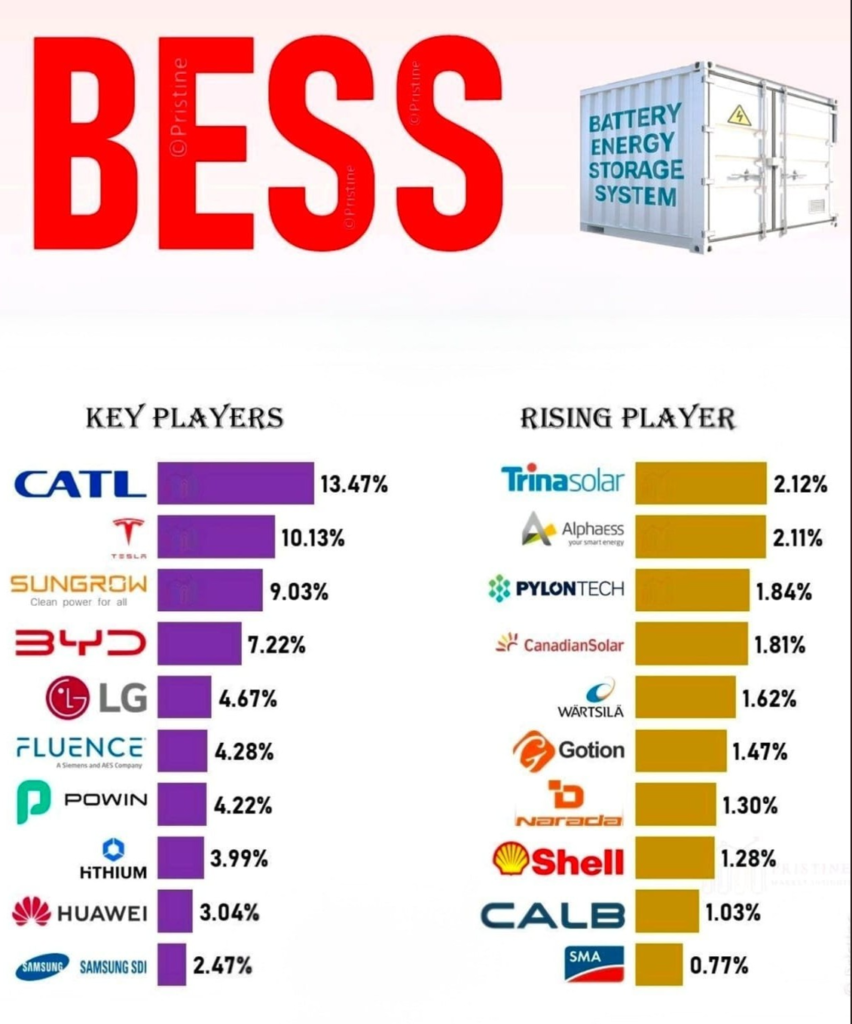
- CATL: The Chinese battery giant leveraged its automotive-scale manufacturing to become a dominant force in the storage sector.
- BYD: A long-standing leader, BYD provides vertically integrated solutions, from cells to complete systems.
- Fluence: Born from the partnership of Siemens and AES, this pure-play storage specialist has been a Tier 1 staple since its inception.
- LG Energy Solution: A pioneer in the field, their chemistries and stack designs have been deployed in gigawatts of projects worldwide.
- Samsung SDI: Another early industry leader, known for high-quality battery cells and integrated systems.
- Tesla: The brand that popularized grid-scale storage with the Megapack, maintaining a strong Tier 1 presence.

- Hyundai Electric & Energy Systems: Emerged as a major player, supplying large-scale systems to the Korean and global markets.

- Panasonic: Brought its deep expertise in battery technology and quality control to the storage industry.

- Pylontech: Made a significant impact, particularly in the residential and commercial storage segments.
- Sungrow: Successfully translated its massive solar inverter expertise into a leading position in storage solutions.
Recent BNEF Tier 1 Companies (The Evolving Landscape)
The market never stands still. Recent quarters have welcomed impressive new names to the Tier 1 ranks. These additions reflect the next wave of innovation and scale.
Recent notable entrants include:
- Trina Storage: The storage arm of the solar giant Trina Solar, bringing integrated solar-storage solutions to the forefront.
- EVE Energy: Gained recognition through major supply deals, showcasing the rise of specialized battery makers in storage.
- Hithium: A newer name that has secured significant, publicly-announced project deals, quickly climbing to Tier 1 status.
- Great Power: Earned its place through substantial commercial project activity, highlighting the depth of manufacturing expertise.
How to use Tier-1 in procurement (practical tips)
- Use Tier-1 as a short-list filter for bankability and prior large project experience.
- Run independent technical due diligence and factory audits — Tier-1 doesn’t remove the need for this.
- Compare warranty terms, degradation guarantees, safety records and service footprints.
- Validate the exact projects BNEF referenced (public press releases, EPC contracts, commissioning reports).
- Check latest BNEF methodology — criteria and thresholds evolve.
Risks & limits of relying on Tier-1 alone
- Not a safety test: BNEF relies on deployments and public data; it doesn’t perform destructive or long-term reliability testing.
- Quarterly churn: companies can move on or off lists as projects age or new evidence appears.
- Regional differences: a Tier-1 supplier globally might still lack local service or spares in your market.
Always combine Tier-1 status with warranty, O&M planning, and site-specific engineering.
Quick checklist for buyers (short, action-oriented)
- Ask for a project reference list (locations, capacities, dates).
- Verify independent third-party buyers on those projects.
- Request performance data and warranty claim history.
- Confirm local after-sales support and spare-parts availability.
- Run or commission an independent technical due diligence (cell, BMS, inverter, thermal design).
Looking Beyond the Tier List
While invaluable, the BNEF Tier 1 list is one part of a complete evaluation. Always consider your specific project needs: technology (lithium-ion phosphate vs. NMC, for instance), warranty terms, thermal management design, and local service support.
The BNEF Tier 1 designation gives you a trusted starting point—a shortlist of companies with a proven commercial track record. As the energy transition accelerates, this list will continue to be the benchmark for quality and bankability in the energy storage revolution.
_____________________________________________________________________________________________________________