
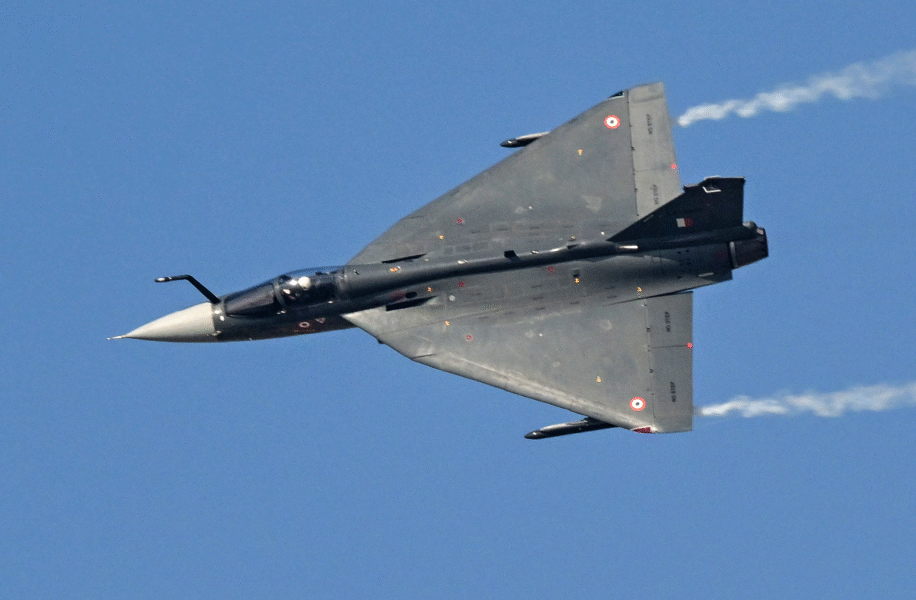
Introduction: A Disturbing Pattern of Indian Jets Crashes
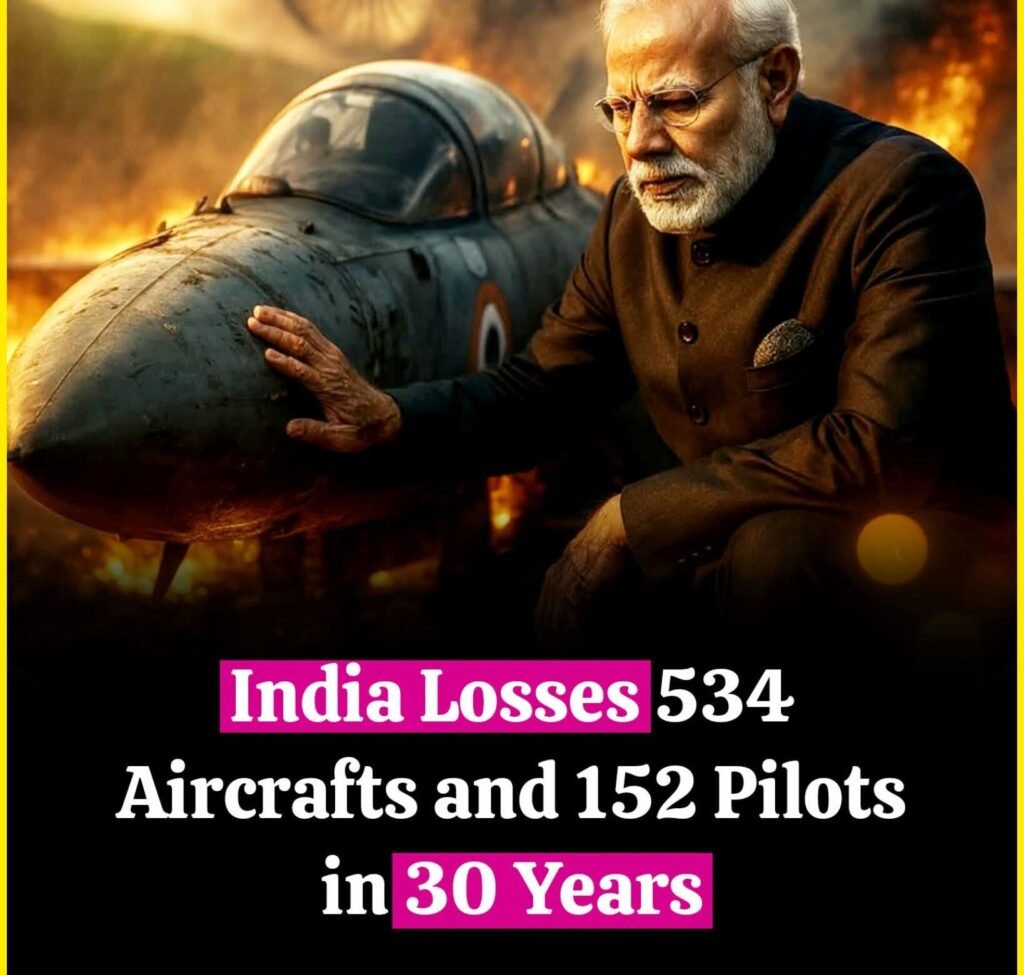
Indian Jets Crash have become a daily news topic these days. The image of a HAL Tejas or MiG-21 Indian jets crashing in a ball of fire is, tragically, a recurring one in India. For decades, news headlines have been punctuated by reports of Indian Air Force (IAF) aircraft accidents and reportedly 534 Indian Jets Crashed leading to fetal accidents and caused death of 152 pilots.
These incidents are not just statistics. They represent the loss of highly trained pilots, multi-million dollar assets, and a significant challenge to national security. The term “flying coffin” has become synonymous with certain aircraft types in the IAF’s inventory.
This blog aims to move beyond the headlines. We will conduct a comprehensive, evidence-based analysis of the complex web of factors behind why Indian jets fall.
We will explore technical failures, human error, logistical nightmares, and strategic dilemmas. Our goal is to provide a clear, objective understanding of one of the IAF’s most persistent problems.
The Scale of the Problem: By the Numbers
The numbers are stark and speak to a long-standing safety crisis. Since the 1970s, the IAF has lost over 500+ aircraft in accidents. A significant portion of these have been MiG-21 jets.
In the last two decades alone, over 175+ aircraft have been lost. This translates to a crash rate that has been significantly higher than that of other major air forces like the US Air Force or the Israeli Air Force.
While the Indian Jets crash rate has shown a declining trend in recent years due to concerted efforts, accidents continue to occur with alarming regularity. Each Indian Jet crash triggers a Court of Inquiry, but the underlying issues are often systemic and sometimes not revealed to general public.
Understanding these numbers requires looking at the three primary categories of causation: The Machine, The Man, and The System. We will begin with the heart of the problem – the aging fleet.
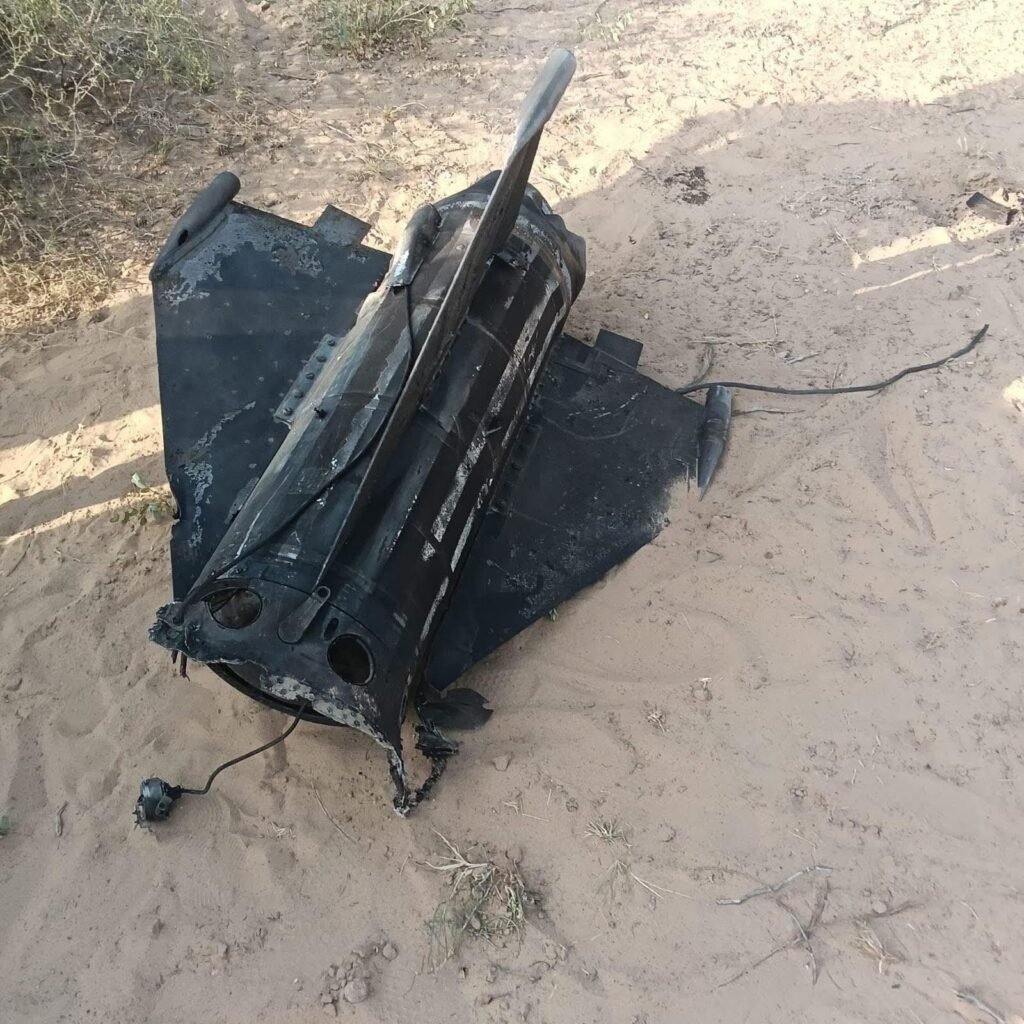
The Aging Fleet, The Reason of Indian Jets Crash?
The IAF operates one of the most complex and diverse fighter jet fleets in the world. This diversity is a maintenance nightmare. It includes vintage MiG-21s, French Mirage 2000s, Russian Sukhoi Su-30MKIs, and indigenous Tejas jets.
The most notorious aircraft in the IAF’s inventory is the MiG-21. Introduced in the 1960s, it was a capable fighter for its time. However, most global air forces retired their MiG-21s decades ago.
The IAF has continued to fly several upgraded variants, like the MiG-21 Bison. While the avionics and weapons were modernized, the basic airframe has a limited lifespan. Metal fatigue is a very real and dangerous phenomenon.
An aircraft’s airframe is subjected to immense stress during flight, especially during combat maneuvers. After decades of service, microscopic cracks develop. These can lead to catastrophic structural failure without warning.
Flying such old aircraft is inherently risky. It is like driving a classic car every day at high speed; the chances of a mechanical failure are simply higher.
The Maintenance Maze: Spare Parts and Overhaul
Aircraft, especially older ones, require meticulous and regular maintenance. This is where the IAF faces a monumental challenge. Maintaining a diverse fleet from different countries is incredibly complex.
Each aircraft type requires its own unique set of tools, training manuals, and spare parts. The supply chain for Russian-origin aircraft like the MiGs and Sukhois has been a persistent problem.
The collapse of the Soviet Union fractured the supply chain for spare parts. While India now deals with Russia and other Soviet successor states, delays and quality issues are common. This leads to a phenomenon known as “cannibalization.”
Cannibalization is the practice of taking parts from one aircraft to keep another one flying. It creates a vicious cycle. One jet becomes a “hangar queen,” grounded to provide parts for others, thus reducing the overall fleet serviceability.
The Hindustan Aeronautics Limited (HAL) is the primary entity for overhauling and maintaining IAF aircraft. However, HAL has often been criticized for delays and quality control issues, further straining the maintenance ecosystem.
The Human Factor: Pilot Training and Error
Pilots or Ground Staff, Cause of Indian Jets Crash?
Pilot error is a factor in a significant percentage of aviation accidents globally, and the IAF is no exception as reportedly 534 Indian Jets Crashed so far in last 32 years till 2025. However, it is rarely a simple case of “pilot mistake.” It is often the result of deeper systemic issues.
Flying a high-performance jet like the MiG-21 is extremely demanding. It is unforgiving of even minor errors, especially at low speeds and high angles of attack. It offers a very small window for a pilot to correct a mistake.
When a technical failure occurs in a new aircraft, a pilot may have more systems and automation to help manage the emergency. In an older, analog aircraft, the workload on the pilot is immense and immediate.
Furthermore, the shortage of fighter aircraft has a direct impact on training. With a depleted fleet, pilots often do not get enough flying hours to build and maintain peak proficiency.
The IAF has consistently struggled to meet its sanctioned flying hours per pilot. Less time in the air means less experience in handling routine flights, let alone complex emergency situations. This creates a dangerous skills gap.
Indian Jets Crash Caused by Bird Strikes and Environmental Hazards
India’s unique environmental conditions also contribute to the accident rate. A significant number of accidents have been attributed to bird strikes. This is a global hazard, but it is particularly acute in India.
Uncivilized Human Behaviors, Cause of Indian Jets Crash?
Rapid urbanization around many airbases has led to an increase in bird populations. Garbage dumps, slaughterhouses, and water bodies near runways attract birds, creating a deadly hazard for aircraft taking off and landing.
An aircraft engine ingesting a bird, even a small one, can cause catastrophic engine failure. At low altitudes during take-off or landing, a pilot has very little time or altitude to recover.
Other environmental factors like haze, dust, and challenging terrain near Himalayan bases add to the operational risks. Pilots often have to navigate through difficult valleys and land on short runways, leaving little margin for error.
War Preparedness: A Fleet Under Strain Causing Indian Jets Crash?
The high accident rate has direct and serious implications for India’s war preparedness. The IAF’s sanctioned strength is 42 squadrons, a number considered necessary to fight a two-front war against Pakistan and China.
However, the current squadron strength has dwindled to around 30-31. This is primarily due to the phasing out of old aircraft like the MiG-21s faster than they can be replaced by new ones like the Rafale and Tejas.
Every crash accelerates this depletion. It’s a double blow: the nation loses a pilot and an aircraft, further weakening the operational fleet. This creates immense pressure on the remaining aircraft and pilots.
The operational readiness rate, or serviceability, of the fleet is another concern. For some fleets, like the Su-30MKI, serviceability rates have been reported to be below ideal levels. This means that on any given day, a significant number of jets are grounded for maintenance.
A force that is struggling to maintain its peacetime strength and serviceability would face an extreme challenge in a high-intensity, sustained conflict where attrition rates would be high.
Internal Weaknesses Cause of Indian Jets Crash
Beyond the public-facing issues of old jets and pilot error lie deeper, systemic weaknesses within the IAF’s support structure.
Systemic and Logistical Challenges resulting into Indian Jets Crash
The Spare Parts Crisis: The reliance on foreign suppliers, particularly for the Russian fleet, creates vulnerability. Geopolitical events like the Ukraine war can disrupt supply chains. Indigenous production of spares by HAL has not always kept pace with demand.
Technical Staff Shortage: The IAF has faced a shortage of highly skilled technicians and engineers. These personnel are the backbone of aircraft maintenance. Attracting and retaining them in a competitive job market is a constant challenge.
Organizational Silos: The complex procurement and maintenance processes involving the IAF, the Defence Ministry, and public sector units like HAL can lead to bureaucratic delays. A lack of seamless integration slows down decision-making and problem-solving.
Training Infrastructure: While the IAF has excellent flying training institutes, the advanced simulation infrastructure for specific aircraft types may not be fully commensurate with the need. More high-fidelity simulators could help pilots practice emergency procedures safely.
The MiG-21 – The “Flying Coffin”
No analysis of Indian Jets Crash is complete without a dedicated look at the MiG-21. Over 400 of the 500+ aircraft lost since the 1970s have been MiG-21s.
The MiG-21 is a classic example of the “perfect storm” of problems. It has an old airframe, a demanding flight character, and a complex maintenance routine. Its safety record has cast a long shadow over the IAF.
The aircraft’s ejection system has also been a point of concern. In several Indian Jet crashes, pilots have been unable to eject safely, leading to fatalities. The sequence and timing for a successful ejection in a failing MiG-21 are critical and leave little room for error.
The IAF has defended the MiG-21 Bison as a potent interceptor. However, its high accident rate has made its continued service a subject of intense public and professional debate. It is a clear symbol of the IAF’s fleet modernization dilemma and MiG-21 Bison is heard as a Flying Coffin for Indian Air Force.
The Way Forward: Modernization and Reforms
Recognizing the crisis, the IAF and the Indian government have initiated several measures to improve safety and combat readiness.
Fleet Modernization: The induction of the Rafale, the increased production of the Tejas Mk1A, and the planned procurement of new multi-role fighters are crucial steps. Retiring the MiG-21s is the ultimate solution.
Improved Maintenance Practices: The IAF has adopted better safety management systems, predictive maintenance technologies, and has been working to streamline its supply chains for spares.
Enhanced Training: Efforts are ongoing to increase flying hours and incorporate more simulator-based training. This allows pilots to experience and handle emergencies in a risk-free environment.
Indigenous Push: The “Make in India” initiative in defence aims to reduce dependence on foreign imports. Successful indigenous projects like the Tejas and future Advanced Medium Combat Aircraft (AMCA) will simplify the maintenance ecosystem in the long run.
A Battle for the Skies on the Home Front
The question “Why do Indian jets fall?” does not have a single answer. It is the result of a toxic cocktail of an aging fleet, logistical bottlenecks, human resource challenges, and systemic delays in modernization.
The Indian Air Force is caught between the past and the future. It is valiantly trying to maintain its operational capability with vintage equipment while simultaneously transitioning to a new, more manageable fleet.
The pilots and technicians of the IAF are among the best in the world, operating under tremendous constraints. The declining crash rate is a testament to their efforts and improved safety protocols.
However, the problem will not be fully solved until the old MiGs are completely retired and replaced in sufficient numbers. The nation’s security depends on winning this battle on the home front – the battle for maintenance, modernization, and safety.
The sky is an unforgiving environment. Ensuring that India’s defenders can navigate it safely is a national imperative of the highest order.
_______________________________________________________________________________________________________________
Glimpse from The Past About Tejas Crash Back in 2017 & 2021
The Truth About the HAL Tejas “Crash” in Dubai: Debunking the Rumors (2017 & 2021)
Introduction: A Viral Myth
In the world of military aviation, few topics generate as much passion and misinformation as India’s indigenous Tejas Light Combat Aircraft (LCA).
A persistent rumor that surfaces online is the claim that a HAL Tejas crashed during a display at the Dubai Airshow.
This story is often shared on social media and certain forums, causing unnecessary concern and damaging the aircraft’s reputation.
This blog will set the record straight. We will investigate the origins of this rumor, present the verified facts, and explore the actual safety record of the Tejas jet.
The Fact Check: What Actually Happened in Dubai?
The HAL Tejas did participate in the Dubai Airshow in 2017 and again in 2021. Its performances were widely covered by aviation media and enthusiasts.
There was no Indian Jet crash.
The Tejas completed its flying displays successfully on both occasions. Videos of its performances are available on YouTube and other platforms, showing the aircraft executing maneuvers without incident.
The 2021 display was particularly significant as it was the Tejas’s first international performance at a major airshow, marking a proud moment for Indian aviation.
So, where did the “Indian Jet crash” rumor come from? The answer lies in a case of mistaken identity and the rapid spread of unverified information online.
The Power of Misinformation: How the Rumor Spreads
The “Tejas crash in Dubai” myth is a classic example of how misinformation can go viral. The cycle typically works like this:
A user on social media or a forum will post a dramatic claim, often with a sensational headline like “Indian-made Tejas Crashes at Dubai Airshow.” They may even attach a photo or video of an unrelated aircraft accident.
Other users, without verifying the source, share the post. The algorithm favors engaging content, and shocking news travels fast.
Soon, the false narrative reaches thousands of people, many of whom accept it as fact. Debunking it later becomes a difficult task, as the initial false claim has already made a deep impression.
This highlights the importance of checking facts with credible, official sources before sharing dramatic news.
A Case of Mistaken Identity: Other Crashes at Airshows
Often, these rumors are fueled by genuine accidents that happen at other airshows around the world, involving different aircraft.
For instance, there have been crashes of Russian MiG and Sukhoi jets, American F-16s, and other vintage aircraft at various airshow events over the years.
A viewer might see a clipped video of such a crash, see comments falsely identifying it as the Tejas, and assume it’s true.
The Tejas, with its delta-wing design, can be mistaken from a distance for other delta-wing aircraft like the Mirage 2000 or even the Eurofighter Typhoon in a low-quality video.
It is crucial to rely on official statements from the airshow organizers, the Indian Air Force, or Hindustan Aeronautics Limited for confirmed news.
The Real Safety Record of the HAL Tejas
While the Dubai crash is a fiction, it is fair to ask: what is the actual safety record of the Tejas?
As of the writing of this blog, the Tejas fleet has a remarkable safety record. There has been no major crash of a Tejas aircraft since its first flight in 2001. Only 02 have crashed till 2025.
This is a significant achievement for any new fighter jet, let alone one that is the first of its kind from its manufacturer.
The program has experienced minor incidents, such as technical snags and aborted take-offs, which are a normal part of aircraft testing and operations.
However, the core fact remains: no Tejas prototype or production aircraft has been lost in a crash. This speaks volumes about the rigorous testing and design philosophy behind the aircraft.
Why is the Tejas a Target for Such Rumors?
The Tejas program is a high-profile symbol of India’s indigenous technological capabilities. As such, it is subject to intense scrutiny and, unfortunately, targeted misinformation.
Geopolitical Rivalry: Entities with an interest in undermining India’s defence manufacturing progress may spread false information to create doubt about the aircraft’s reliability.
Domestic Skepticism: Within India, there is a segment of opinion that is historically skeptical of public sector projects like HAL. Any minor incident is sometimes amplified into a major failure.
The “New Kid on the Block” Syndrome: As a new entrant in the world of fighter jets, the Tejas is held to an extremely high standard. Every minor flaw is magnified, while its achievements are often downplayed.
Understanding this context helps explain why such baseless rumors find a receptive audience.
Trust Verified Facts Over Viral Fiction
The story of the HAL Tejas “crashing” in Dubai is a complete fabrication. It is a myth born from the potent combination of mistaken identity and the viral nature of online misinformation.
The verified truth is that the Tejas has performed admirably at international airshows and maintains a perfect flight safety record, with zero crashes to its name.
For a nation developing its own fighter jet for the first time, this is an accomplishment worthy of recognition, not false accusation.
As consumers of information, we must all practice digital hygiene. Before sharing dramatic news, especially about complex subjects like defence technology, a quick check with credible sources can stop the spread of falsehoods.
The HAL Tejas has its challenges, but a crash in Dubai is not one of them. The real story is one of a maturing indigenous program steadily finding its place in the skies.
________________________________________________________________________________________________________________
A Rumor of 2017 & 2021 became reality in 2025
On Friday, Nov 21, 2025 the rumour spread in 2017 & 2021 became true and a trajic reality. India’s Tejas fighter jet crashed in a ball of fire in front of horrified spectators during an aerial display at the Dubai Airshow with a pilot death.
The Indian Air Force has said it is setting up an inquiry to investigate the cause.
State-owned Hindustan Aeronautics manufactures the aircraft, which is powered by General Electric engines. Both companies have said they will support the investigation.
Tejas, which means brilliance in Sanskrit, is seen as crucial for India’s efforts to modernise its air force fleet of mainly Russian and ex-Soviet fighters. It has taken more than 40 years but HAL is not been able to achieve a smooth mass production.
The crash, which killed the pilot, dampens India’s hopes of exporting the home-built jet and leaves it reliant on Indian military orders to sustain its role as a showcase of domestic defence technology.
Such a public loss could overshadow India’s efforts to establish the jet abroad after a painstaking development over four decades, experts have said despite the fact that Pakistan has succeeded in manufacturing and showcasing it own build JF-17 Thunder and started getting export orders after excellent performance in war with India in May 2025 in which 08 jets were downed by PAF.
Hindustan Aeronautics said on Monday that the crash will not affect its business operations, financials or future deliveries.
Shares of the company, which were trading three per cent lower since morning, were unchanged after the statement and the crash created doubts on the capability of the jet. Reportedly the countries in line of ordering Tejas are either considering cancellation of orders and started looking for other option better than Tejas, a real setback for India.
________________________________________________________________________________________________________________